
Reformations & Transformations: At an Off-Angle
“The Reformer is always right about what’s wrong. However, he’s often wrong about what is right.” – G.K. Chesterton, The Illustrated London News, October 28, 1922.

Overview: “Rouhani, 69, suggested there was a generational element to the unrest, which appears to have been spear-headed by under-25s. ‘We cannot pick a lifestyle and tell two generations after us to live like that. It is impossible... The views of the young generation about life and the world is different than ours,’ he said.” – Bozorgmehr Sharafedin, “In a jab at rivals, Rouhani says Iran protest about more than the economy,” Reuters, January 8, 2018.
Depending on how broadly or stringently the term is applied, we are all “third culture kids.” The Merriam-Webster online dictionary article, “What is a Third Culture Kid,” defines a third culture kid as “a child who grows up in a culture different from the one in which his or her parents grew up.” Technological advances, socio-political events, the drift of the world, changing opinions, music and entertainment tastes insure that the world of each generation is a different culture from the one in which our parents grew up. Social stresses are directly linked to the speed (sometimes called “Future Shock” a la Alvin Toffler) and depth of change.
This month we will talk about the depth of change, everyone else talks about speed of change.
Sections:
Renaissance, Not The
Taxonomy of Time
Slipping Into the Dark Ages
Continuity of the Black Death
A Big Stomachache
The Print Contagion
Plague of Pundits
Fault Lines Forming, Fractures Fibrillating
The Reformation
Nuns on the Run
Interesting Times
Understanding the Question
Universal Reformation of Mankind
A Reformation of History
Neolithic Transformation
Diminution of Distance
Bounds of Morality
Twenty Chiliad
Post-Apocalyptic Reality
Eras
Bulwarks of the Past
A Dying Age
The Blurry Lines of Progress
Electric Uber Alles
Transhuman Touchdown
Temporal Alpha Decay
Starry Messengers & Monsters from Afar
Quantum Leapfrog
“There exists in such a case a certain institution or law; let us say, for the sake of simplicity, a fence or gate erected across a road. The more modern type of reformer goes gaily up to it and says, ‘I don’t see the use of this; let us clear it away.’ To which the more intelligent type of reformer will do well to answer: ‘If you don’t see the use of it, I certainly won’t let you clear it away. Go away and think. Then, when you can come back and tell me that you do see the use of it, I may allow you to destroy it.’” – G.K. Chesterton, “Chesterton’s Fence” principle, The Thing: Why I Am a Catholic (1929).
It has long been held in the wisdom of our society that it is easier to destroy than create, recently echoed by Pope Leo XIV on April 116, 2026 who stated during a Papal visit to Cameroon, “The masters of war pretend not to know that it takes only a moment to destroy, yet often a lifetime is not enough to rebuild.” At some point in my life, I heard an argument that while the 1960s counter-culture ‘destroyed’ the culture of their parents, the movement burned out before it could create something new to replace what they had destroyed; they became working parents and “never trust anyone over 30” became a sardonic memory of Peter Townshend’s “my generation.”
Sometimes what is destroyed cannot be replaced. A few decades ago at work, I could not get a ribbon cartridge to ‘click’ into my office typewriter, no matter how much I tried or which way I moved it; I decided that the pin that was sticking up was stopping it and in young frustration broke it off. The cartridge then clicked right into place and ... when I started typing, I discovered that while the cartridge was in place, it tended to move upward as I typed, quickly the ribbon was no longer aligned with the key-strikes on the paper. So I then had to find a weight to keep it down; I got some coins and tape to hold them on top of the cartridge and it worked sort of, but never was right again. I used that typewriter for about six months more, fortunately, my boss never discovered it before I left my employment.
“Mohammed had touched off one of those explosions of human energy which transcend ordinary considerations of arms and tactics. Outbursts of this sort, mysterious and dreadful in the new forces they are capable of generating, have never failed to shatter existing military values. Their true origins, like those of electricity or atomic energy, must remain largely in the nature of a cosmic enigma. Their causes and effects are more open to analysis, and it is noteworthy that such explosions have inevitably led to aggression. Defenders, however brave and patriotic they may be, are never charged with quite the same mystical fury. Man, it has been said, is the only animal on earth willing to fight and die for an idea. The distinction offers a further clue to those hurricanes of conquest which have occasionally swept through history, leaving the wreckage of empires behind them. For the most potent weapon of a Mohammed, a Jenghiz Khan or a Hitler is an idea generated into human energy.... Conquerors of this type, it seems, are not restricted at first by the usual laws of tactics and strategy.” – Lynn Montross, War Through the Ages (3rd Ed., 1960), p. 121. (emphasis added)2
Like the plastic pin in the typewriter, often what is destroyed in the violent ‘progress’ of the world, such as the House of Wisdom in the 1258 A.D. Sack of Baghdad (Bayt al-Hikma)3 that ended the Islamic Golden Age (or others, such as the Sacks of Constantinople, Rome, Jerusalem, Kiev, Magdeburg... or the Anabaptists burning of books in Munster), cannot be in any event, replaced; despite Carl Sagan’s famously distorted narrative of the destruction of the Library of Alexandria in Cosmos (1981),4 it is clear that what was lost was both great and irreplaceable, especially as Marcus Anthony had looted the Library of Pergamum to refill the Library of Alexandria as a wedding gift to Cleopatra putting a large part of Antiquity’s writings in one place.5
Destruction of the irreplaceable is the race against which modern anthropologists and historians run, man-made destruction continues into the 21st Century like an annual rainfall across the Middle East (or Orient if you like); German amateur antiquarian and businessman Heinrich Schliemann’s reckless use of dynamite to excavate ancient Troy in 1870 A.D. did more damage to the city than Greeks and earthquakes combined. Fortunately, most of the prehistoric stone Jars survived the U.S. Air Forces’ carpet bombing of Laos.
Renaissance, Not The
“In its literal translation, the word ‘Renaissance’ comes from the French language, meaning ‘rebirth.’ French 19th-century historian Jules Michelet was one of the first to use this term to describe the art of Italy and beyond in his iconic text, Renaissance, 1855. He argued that 14th century Italy had ‘rebirthed’ classical antiquity through its emphasis on beauty, elegance, and a deep understanding of the human form. The 19th-century Swiss historian Jacob Burckhardt also developed similar theories in his influential essay The Civilization of Renaissance Italy, 1860. Both historians popularised the term ‘Renaissance,’ which is so commonly used today.” – Rosie Lasso, “The Word Renaissance: Meaning, History, & Cultural Impact: The word Renaissance usually refers to a period of classical revival in Europe in the 14th-16th centuries, but this is not the only use of ‘Renaissance.’”
“Renaissance” and “reformation” are words that describe an event or process independent of the still prevalent and accepted Western historical periodizations called “The Renaissance” and “The Reformation.” As noted previously with regard to dictionary definitions conflating “human” and “person” many dictionary definitions of “renaissance” are mainly of “The Renaissance” with other meanings an afterthought, for example, Merriam Webster simply notes at “renaissance”:
“2: often, Renaissance: a movement or period of vigorous artistic and intellectual activity, 3: Rebirth, Revival.”
And Oxford Advanced Learner’s Dictionary follows suit:
“2: a situation when there is new interest in a particular subject, form of art, etc. after a period when it was not very popular.”
Both following after top definitions of The Renaissance. Cambridge Dictionary does not put the cart before the horse though, with the top definition of “renaissance”:
“a new growth of activity or interest in something, especially art, literature, or music.”6
Followed by a definition of The Renaissance.
Thus, the term(s) can be retroactively applied to other times and places, for example, the Akkadian Renaissance which is entirely congruent with the Akkadian Empire (2334 to 2154 B.C.) or post-Akkadian Renaissance of Sumer (mainly 2047 to 1750 B.C.) broadly describe cultural periods in ancient Mesopotamia developed from the archeological record based on modern periodization concepts. It is certain that the people of ancient Mesopotamia had a different view.
“Golden Age” – such as the Golden Age of Islam or Golden Age of Pericles – can be an overlapping term to “renaissance” (Google AI actually listed The Renaissance as an example of a “golden age” along with Pax Romana and the Gupta Empire of India), but they are not exactly congruent in that “Golden Age” is a qualitative ‘peak’ term for a successful era whereas “renaissance” is the vehicle; the Golden Age is the gleaming royal galley flagship and the “renaissance” are the sailors and oarsmen below deck. Restorations can sometimes seem to have elements of or inspire a renaissance, but it depends on circumstances, for example, due to the 700-year Shogun rule and the consequences of xenophobic isolationism, the Meiji Restoration and their turn to Western technology and modernization could have elements of renaissance (historians dispute this) but did lead to a sort of Golden Age, while conversely, the Bourbon Restoration was simply a reversion to the pre-Revolutionary condition, a reinstatement of the Ancien Regime, from 1814-1830 followed by the liberal constitutional July Monarchy (1830-1848).
Taxonomy of Time
“Taxonomy is described sometimes as a science, and sometimes as an art, but really, it’s a battleground.” – Bill Bryson, A Short History of Nearly Everything (2003).
“I trust I have not lost sight of the broader question with which I began, namely, whether history is a unified, continuous whole or whether it is broken up instead into segments of greater or lesser length. To put the question another way: does history really need to be divided into periods?” – Jacques le Goff, trans. M. B. DeBevoise, preface to Must We Divide History Into Periods? (pub. posthumously in 2015).
Periodization is a historians’ fuzzy compartmentalization-of-history game and is linked to the literary-historical term zeitgeist (e.g., we love lavish historical costume dramas, sword and sandal epics, and Old Westerns). Or as Prof. Paul Mason of Duquesne University famously said in graduate History of the Enlightenment class, “Historians cheat.”7 Google AI offers the following helpful summaries (in response to questions a human had to cognize to ask properly or at all) in relevant part:
“Historical periodization is the practice of dividing the past into distinct, named blocks of time (e.g., Ancient, Medieval, Modern) to make the study of history more manageable, analytical, and understandable. While often necessary for organization, it is considered a form of ‘compartmentalization’ because it forces continuous, complex human history into artificial ‘containers’ or ‘chapters’ that rarely have clear, definitive start or end dates. Artificial Divisions: The boundaries between periods are arbitrary. For instance, the Gilded Age and Progressive Era are divided at a point that overlooks the continuity of economic forces. Eurocentrism: Conventional periodization (Ancient-Medieval-Modern) primarily reflects European history, which often fails to fit the development of other regions like India. [Notice that the images in this Post are European?] Overlooks Overlap: Periodization can create false, rigid boundaries, making it difficult to recognize that ideas and technologies from one era often begin long before it starts.”
Watching a movie set in a common historical time and location, you expect the characters to act, speak and dress in a certain way, that certain divisions and occupations will be ubiquitous and/or dominant, that certain archetype and stock characters will appear, in a really well made movie, the zeitgeist plays an important role in or is the movie, contrast for example, Flesh + Blood (1985), Apocalypto (2006) or Hagazussa (2017) with that awful short-lived 1992 medieval TV series, “Covington Cross.”8
“Historical periodization—the act of dividing history into distinct, named blocks (e.g., The Renaissance, The Victorian Era) – is profoundly linked to the Zeitgeist, or ‘spirit of the times.’ This connection suggests that periods are not just neutral chronologies, but are defined by a prevailing, dominant set of ideas, cultural patterns, and intellectual sensibilities that characterize an era. Defining Eras through Shared Spirit: Historians often use the Zeitgeist to bundle diverse events, social movements, and cultural products (art, literature) together under one label. Retrospective Identification: While some eras are named by those living in them (e.g., ‘digital age’), many periods are identified ex post facto (in hindsight) by historians who identify a common ‘spirit’ that connects the social life of that time. Arbitrary Beginnings/Endings: Because a ‘spirit’ changes gradually, the specific years chosen to mark the start or end of a period are often arbitrary. Shifting Perspectives: Historical periodization is continually challenged and rewritten because, as our current Zeitgeist changes, so does our perspective on the past.” Id. Google AI.9
History is always a retroactive interpretation. It’s all relative depending on which way you want to slice the cake. For example, the people of the Middle Ages did not think of themselves as living in the “Middle Ages,” a term coined by early Renaissance humanist scholar Petrarch (b. 1304 d. 1374, the Italian Renaissance began around 1340) who conceived of a European “Dark Age”10 describing an intermediate period between the end of the Western Roman Empire (i.e. the end of Antiquity) and his own time.11 We have been stuck with the term since then because concepts and ideas have a stickiness (the Lindy Effect):
“The concept of periodization is alluded to have been brought into use for the first time by Pausin in his work Feodium, 1634 while describing the economic transition of Europe in Seventeenth century. Subsequently, Leyden [Holland] historian [Georgius] Hornius of Arca Novea [the writer conflated author’s name with misspelled title of his book pub. in 1666 titled Arca Noae (the “Ark of Noah”)], introduced the binary concept of antiqua/moderna in 1666. The current tripartite concept of periodization into ancient, medieval and modern came to significance in 1688. The Lutheran humanist Cristoph Keller or Cellarius (1634-1700) segmented the history of Europe into three major periods of ancient medieval and modern in his medium aevum: Constantine the Great to the Constantine XI (1453) published at Cologne since than [sic] the colorless mental category of periodization was widely used to offer a secular explanation of past historical events on a broader time framework.” – A. Gangatharan, “The Problem of Periodization in History,” Proceedings of the Indian History Congress, Vol. 69 (2008) preview on JSTOR from a scan of the book page.
The concept of “feudalism” and “feudal society” is a 19th Century invention – the first known use of “feudalism” occurs in 1818 according to Merriam-Webster online dictionary – applied retroactively to describe the society of the Middle Ages – itself an invented and retroactively applied term from the Renaissance. The terms retroactively describe (some claim inaccurately) the relationships and society of Medieval Europe (‘feudal’ first appeared in English in 1602 according to Merriam-Webster online dictionary and is thus, retroactive). None of the terms we use now would have been known to or current to the people of the ‘Middle Ages.’
Periodization is a key set of cultural interpretations that serve as the epistemological divide that – and this cannot be overstated – essentially create our sense of history; it is a shorthand to what is actually a continuous and never-ending set of processes (often competing with prior periodizations in previous or foreign cultures). Periodization can be both a political-religious tool (e.g. why do we use A.D. and B.C. or now sometimes, CE and BCE in the West as opposed to the Roman or Jewish calendar?) as well as a mental trap of self-created compartmentalization that prevents appreciation of the larger continuities of history, as described by macrohistory, for example.
And since historians (and their ‘co-conspirators’ in archeology and anthropology) invented periodization, they are most prone to using it, as in this fine 1946 example (note the capitalization and that “compartmentalization” is similar to Landes’ “generalized autarky,” infra):
“At least the Machine Age, which left so many debts to be paid by wars of the twentieth century, can point a moral for the Atomic Age. For the basic causes of most of the strife since Waterloo may be traced to the artificial barriers raised by nationalism. This is no new situation in history. The same conditions, limited by means of communication, prevailed in the Middle Ages. Europe was divided into thousands of idea-tight little compartments – the fiefs ruled by ironclad lords from behind stone walls. Traders and travelers had to pay tribute to these petty robber barons, who were not far enough advanced to have thought of tariffs, visas, cartels and customs duties. The state held only nominal authority, and the serf had no more rights than the domestic animals which shared his miserable hut. The consequence was stagnation tempered by chaos.
Then came the invention of gunpowder, one of civilization’s greatest blessings. Society at last had found a force powerful enough to destroy the compartments which were imprisoning progress, a force constructive enough to let light and warmth into a continent. Feudal stone walls were battered down by cannon balls, and the Renaissance ushered in a new era of nationalism suited to the communications of the age. There could be no question on August 6, 1945 that a similar turning point had been reached. For the explosion at Hiroshima gave every indication of being powerful enough to batter down the walls of nationalism – the feudalism of the nineteenth century. Frontiers and fortified belts had already been made anachronisms by twentieth-century bombing planes, and the other barriers could not long stand up against atomic energy. Any doubts on that score were dispelled by announcements that the effectiveness of the new weapon was matched by its economy. Although an enormous sum had been spent on the original research, future military costs would not be beyond the reach of small countries.” – Lynn Montross, War Through the Ages, (2nd Ed. (1946)), p. 951. [Note: this excellent text does not appear in the 3rd edition, 1960, whose final chapters were extensively rewritten]
The ultimate periodization and natural compartmentalization of our personal histories (or “autobiographical memory” as Prof. Damasio called it) is our ‘childhood’ – the sapient adult interpretation and autobiographical obsession with the zeitgeist of childhood dictate the rest of our lives.
Slipping Into the Dark Ages
“While the specific phrase ‘thousand-year detour’ is often a paraphrase used in discussion, Carl Sagan famously discussed a massive ‘detour’ in human scientific progress in his book and series Cosmos (specifically Episode 3: Harmony of the Worlds). Sagan argued that the loss of ancient knowledge – particularly that of Aristarchus, who realized the Earth revolved around the Sun – and the subsequent reliance on Ptolemaic, Earth-centered dogma, stalled astronomical progress for over a millennium. ... He often referred to this period as a, or a ‘dark age’ of scientific thought, where the understanding that Earth was a planet among others was lost.” – Google AI.
Carl Sagan suggests in the Cosmos TV series that but for ‘thousand year detour’ (paraphrasing) into mysticism, humanity’s technology would be a thousand years more advanced and we might be headed to the stars now; I specifically remember from my youth a flash image from Cosmos of a starship with ancient Greek lettering on the side that accompanied this point.
“[Ptolemy’s] model permitted reasonably accurate predictions of planetary motion. Good enough predictions for the precision of measurement in Ptolemy’s time and much later. Supported by the Church through the Dark Ages, Ptolemy’s model effectively prevented the advance of astronomy for 1,500 years.” – Carl Sagan, Cosmos, Ep. 3 (1980). (emphasis added)
Later in Episode 7, he continues:
“The books of the Ionian scientists are entirely lost. Their views were suppressed, ridiculed and forgotten by the Platonists and by the Christians, who adopted much of the philosophy of Plato. Finally, after a long, mystical sleep in which the tools of scientific inquiry lay moldering, the Ionian approach was rediscovered. The Western world reawakened. Experiment and open inquiry slowly became respectable once again. Forgotten books and fragments were read once more. Leonardo and Copernicus and Columbus were inspired by the Ionian tradition.”12
Sagan’s assertion is reflected, for example, in the following dialogue from Stargate SG-1 TV series, “Enigma” episode (1998):
“JACKSON: Yes. Umm...we’d be colonising space right now if it hadn’t been for the Dark Ages. There was a period of over eight hundred years where science was heresy and anathema. Maybe they didn’t have that set-back.”
The sleight-of-hand is that while Carl Sagan – lets say – wasn’t a fan of the Middle Ages and lectured on the macrohistorical cost of the loss of Ionian thought (see FN 12, supra) – the writers of Stargate SG-1, perhaps from Cosmos Episode 3, took it literally to mean the periodization called the Dark Ages which they apparently (perhaps channeling Petrarch, supra) conflated with the entire Middle Ages (broadly 500 to 1300 or 1500 A.D.) of which the “Dark Ages” was only the initial period in modern periodization. The Dark Ages (broadly 476-800 A.D. or 500-1000 A.D.) – a term that is obsolete and maligned by scholars – occurred primarily in post-Western Roman Empire central and western Europe (the Asimovian space-opera equivalent is the “Long Night”) and is in no basic mathematical sense, eight-hundred or a thousand years no matter how the period is defined. The sleight-of-hand is also geographically fallacious unless one considers Europe and humanity to be congruent to the exclusion of the rest of the world, that is, the writers of Stargate SG-1 (and to some vaguer extent, Sagan) engaged in the gross Eurocentrism described above.
In fact, other people, especially the Chinese, made technological advances up to the 13th Century then stagnated technologically under the political, religious and cultural suppression of reactionary elites (this also has been cited as the reason for abandonment of the Chinese Treasure Fleet).
“The world history of technology is the story of a long, protracted inversion. As late as the end of the first millennium of our era, the civilizations of Asia were well ahead of Europe in wealth and knowledge. The Europe of what we call the Middle Ages (say, tenth century) had regressed from the power and pomp of Greece and Rome, had lost much of the science it had once possessed, had seen its economy retreat into generalized autarky. It traded little with other societies, for it had little surplus to sell, and insofar as it wanted goods from outside, it paid for them largely with human beings. Nothing testifies better to deep poverty than the export of slaves or the persistent exodus of job-hungry migrants. ...
It would seem that none of the conventional explanations tells us in convincing fashion why technical progress was absent in the Chinese economy during a period that was, on the whole, one of prosperity and expansion. Almost every element usually regarded by historians as a major contributory cause to the Industrial Revolution in north-western Europe was also present in China. There had even been a revolution in the relations between social classes, at least in the countryside; but this had had no important effect on the techniques of production. Only Galilean-Newtonian science was missing; but in the short run this was not important. Had the Chinese possessed, or developed, the seventeenth-century European mania for tinkering and improving, they could easily have made an efficient spinning machine out of the primitive model described by Wang Chen. A steam engine would have been more difficult; but it should not have posed insuperable difficulties to a people who had been building double-acting piston flame-throwers in the Sung dynasty. The crucial point is that nobody tried. In most fields, agriculture being the chief exception, Chinese technology stopped progressing well before the point at which a lack of scientific knowledge had become a serious obstacle.” – David S. Landes, “Why Europe and the West? Why Not China?” Journal of Economic Perspectives, Volume 20, Number 2, Spring 2006.13
The “protracted inversion” is a macrohistorical phenomenon that is called the “East-West technological inversion,” a term coined by Landes in his 1998 book and is a critical explanation (combined with the work of Jared Diamond) of Western global hegemony over 500 years, leading to another phenomenon known as the global “Columbian Exchange” and “ecological imperialism” (Alfred Crosby, 1972, 1986) of plant and animal species (and diseases, e.g., COVID-19) via oceangoing trade and tourism (and later, international flights) and intentional introduction to foreign environments, e.g., the Irish Potato Famine (1845-1852) resulting in a 25% population reduction due to starvation, disease and emigration on “coffin ships,” potatoes being introduced to Ireland in about 1589 and developing into the near exclusive crop over two centuries until the famine.
Back to East Asia, the reactionary elements intensified after European ships reached China (1513) and Japan (1543), and especially in xenophobic, socially-stratified Shogunate Japan where technology and Christianity were threats to the domination of the Samurai. This Eastern stagnation had no connection at all to the European ‘Dark Ages’ and thus, there is no way to seriously suggest that the European ‘spirit of tinkering,’ or the Enlightenment could have occurred, in say, the 6th or 7th Century Europe; rather, it was the emergent reaction – Renaissance, the name that the people of the time gave to themselves means rebirth – from the Church-dominated, decentralized authority and culturally compartmentalized, desperately poor Europe of the 12th through 14th Centuries that made the Renaissance seem like spring had come.
Continuity of the Black Death
“The plague repeatedly returned to haunt Europe and the Mediterranean throughout the 14th to 17th centuries. According to Jean-Noël Biraben, the plague was present somewhere in Europe in every year between 1346 and 1671 (although some researchers have cautions about the uncritical use of Biraben’s data). The second pandemic was particularly widespread in the following years: 1360–1363; 1374; 1400; 1438–1439; 1456–1457; 1464–1466; 1481–1485; 1500–1503; 1518–1531; 1544–1548; 1563–1566; 1573–1588; 1596–1599; 1602–1611; 1623–1640; 1644–1654; and 1664–1667. Subsequent outbreaks, though severe, marked the plague’s retreat from most of Europe (18th century) and northern Africa (19th century).” – Wikipedia, “Black Death.”
The story of the Black Death begins at the Siege of Caffa in 1346 A.D. when Mongol besiegers catapulted bodies of those who had died of the plague over the walls into the city. What happened following this local incident is what terrifies us now; Genovese ships fleeing Caffa brought the Black Death back to Italy. The plague reached England 1348, Moscow 1353; Syphilis also first appeared in Europe in 1495 after soldiers returned from the New World.
Bubonic reappeared regularly and swept through some regions of Europe every 15 to 30 years through the 15th and 16th Centuries, and with diminishing intensity into the 17th and 18th Centuries. Mortality rates were between 30% and 60% within a few months, especially in urban areas, and those who could, fled to other places in human waves, spreading the disease farther in a sort of geometric progression.14 Martin Luther’s widow, Katarina von Bora died of injuries from a cart accident in 1552 at the city gates of Torgau, Germany, fleeing the plague. Two Popes died of the Bubonic Plague, and one in the earlier Plague of Justinian, while six Cardinals died of the plague in 1348 alone and over 45% of the priests perished of the plague, what chance did commoners have?15
The Black Death was not the sole cause of feudal society collapse or the Reformation and the Wars of Religion between the 15th through 17th Centuries, but as an initial cause, it undermined existing authority,16 upended the social order (Danse Macabre, no one was safe from the plague, mors omnia aequalia – all are equal in death), and contributed to an era of widespread paranoia, fear, militant religious fanaticism, medieval sociosis (individual neurosis caused by social interactions, community contradictions, and collective delusions), tarantism (‘dancing manias,’ see FN 21, infra) and persecution of ethnic minorities, social outsiders and foreigners (e.g., Johannes Kepler’s difficult, quarrelsome mother was accused of witchcraft); an estimated 40,000 to 60,000 people were executed in Europe for witchcraft between 1450 and 1750, based on incomplete surviving records, plus uncountable extra-judicial lynching/murders during feuds where allegations of witchcraft were common.
As late as 1771 (four years before the American Revolution17), a riot in Moscow began as protests against extreme measures taken in the city to stop one of the last bubonic outbreaks. The archbishop was murdered by a mob and two monasteries were burnt; it seems that someone had the idea that burning down the poor sectors of the city would stop the plague:
“The first signs of plague in Moscow appeared in late 1770, which would turn into a major epidemic in the spring of 1771. The measures undertaken by the authorities, such as creation of forced quarantines, destruction of contaminated property without compensation or control, and closing of public baths caused fear and anger among the citizens. The city’s economy was mostly paralyzed because many factories, markets, stores, and administrative buildings had been closed down. All of this was followed by acute food shortages, causing deterioration of living conditions for the majority of the Muscovites. Dvoryane (Russian nobility) and well-off city dwellers left Moscow due to the plague outbreak.” – Wikipedia, “Moscow plague riot of 1771.”
A Big Stomachache
“The secrets of evolution are time and death. Time for the slow accumulation of favorable mutations and death to make room for new species.” – Carl Sagan, Cosmos, Episode 2.
The public-school lesson for the Black Death usually amounts to a page or two in most history textbooks, at least in my youth. All memory of it disappeared as soon as the chapters advanced from the Renaissance to the discovery of the New World. Students were left with the impression that the plague was a one-off event, like a big stomach ache that went through Europe rather than the massively destructive persistent natural entropic event that significantly (along with the Little Ice Age (c.1300-1850, most of the recorded times that the Thames River froze over in London were during this period)18) undermined the already sluggish economy and population growth, and popular confidence in and competence of the Church (see FN 16, supra) who legitimized secular authority in Europe (modern “atheism” is a reaction to centuries of abuse of Church-legitimized authority).
None of this is an accident. There is a palpable daily-existential-terror, both physical and of damnation of the eternal soul, zeitgeist to that age in Europe, with which Baby Boomers and Gen X of the Cold War could vaguely identify but not so much millennials, that is expressed in their art, writing, acts, hypersensitive fervor, superstitions and religious extremism (e.g., the Anabaptist seizure of Munster, 1534-1535 presaging the Puritan rule of England from 1649-1660) and churning political and class chaos, dramatized now in historical costume dramas such as Flesh + Blood (everyone is certifiably Erasmus-Lutheresque nuts in this 1985 movie), The Deluge (1974 Polish film about the Swedish Invasion of Poland, 1655-1660) and Hagazussa (2017, an exploration of medieval sociosis and witchcraft). The critically-acclaimed gritty historical film Black Death (2010) is noted for its brutal realism and a stark atmosphere in a story set during the Black Death in England that demonstrates the zeitgeist described above.
It helps greatly in this American public-education truncation of world history that the Black Death never crossed ‘The Pond’ (Atlantic Ocean) to the New World, the first recorded bubonic case in the United States was in 1900. There is no record of bubonic epidemics in the English or Spanish colonies, though there were many other outbreaks (e.g., smallpox), one of which killed 90% of the indigenous population of New England from 1616-1619:
“For the natives, they are neere all dead of Small poxe, so as the Lord hathe cleared our title to what we possess.” – John Winthrop, first Governor of Massachusetts Bay Colony, quoted in Alfred W. Crosby, Ecological Imperialism: The Biological Expansion of Europe, 900-1900 (1986), p. 208.
The truth of the plague would alarm, and the truth of The Reformation would reopen debates that moderns want to remain buried; this was collectively decided by our grandparent’s civilization.19 Much of this may have to do with the Cold War; the Black Death scares the bejesus out of us even now (e.g., movies such as The Stand (1994), Outbreak (1995), 12 Monkeys (1995), Children of Men (2006), and Contagion (2011) and zombie apocalypse movies), it is possible that educators saw the effects of the threat of global thermonuclear annihilation on our culture20 and decided to skip serious teaching about the Black Death.21
Unlike smallpox, bubonic bacteria (Yersinia pestis) is not ‘extinct’ in the wild. The predecessor bacteria that triggered the bubonic plague has been found in human remains from the Bronze Age, 4,800 years ago where it is theorized to have caused non-lethal and temporary stomach aches, tiredness, slight fever. However, it has recently been discovered that a genetic mutation occurred in the bacteria that allowed it to survive inside the flea, blocking the flea’s insides so that the flea felt hungry and bit hosts more frequently. Further mutations allowed the bacteria to survive inside human lungs, spread to other tissues and go airborne; two means to spread, bite and airborne, made bubonic very contagious.
A woman in Oregon was diagnosed with the bubonic bacteria in February 2024, the first case in eight years. It was news because of the dreaded history of the Black Death (the Second Pandemic) and because no one expects it to happen now; for example, a person diagnosed with cancer, arthritis, etc. does not generate news articles unless they are famous. True.
So in addition to the dangers of periodization to the continuity of history, choices of public educators leave the products of the public school systems without proper cognizance of the world, who then pass it onto the next generations. Thus it is not surprising that we are surprised when the bubonic bacteria appears in the news feed or that adults coming from the public-education system22 do not understand the ramifications such as The Reformation and its social effects in combination with the Little Ice Age (c.1300-1850).
The Print Contagion
“The outstanding difference between the two ends of the Old World was the absence of screw-presses from China, but this is only another manifestation of the fact that this basic mechanism was foreign to that culture.” – Wikipedia, “Printing Press” (FN 44) citing to Needham, 1965, p. 211.
“Chinese paper was suitable only for calligraphy or block-printing; there were no screw-based presses in the east, because they were not wine-drinkers, didn’t have olives, and used other means to dry their paper.” – Wikipedia, “Printing Press” (FN 44) citing to Yves Duchesne, 2006, p. 83 and John Man, 2002, pp. 112-115.
The introduction of European olives (and other fruits) to China and other places, is an example of the 500-year Columbian Exchange, supra (both syphilis and the Columbian Exchange were discussed in the December 14, 2025 Looking Substack Post, “Macrohumanity 1: The Great Drama”). A form of movable type press was invented during the Song Dynasty by Bi Sheng about 1040 A.D. using baked clay or ceramic characters, but was hampered by the thousands of logograms – about 53,000 at the time of the Song Dynasty during which time the number of logograms quadrupled in 30 years (Gaungyun rime dictionary, 1008 vs. Jiyun rime dictionary, 1037) – in the Chinese script and was thus less efficient than wood block printing. As is discussed later, many East Asian inventions, predating those in Europe, were restricted, underdeveloped, abandoned and lost, only to be re-imported from Europe later; gunpowder was accidentally discovered by Taoist alchemists in 808 or 850 and the formula written down in 1044. This demonstrates the East-West Technological Inversion (Landes, supra).
The spiraling cost of hand-copying books, caused in part by a shortage of labor due to the Black Death, led Johannes Gutenberg to invent the movable-type printing press (descendent of the European wine press) in about 1436 (during the Hundred Years War, Strasbourg was a Free Imperial City, not part of France) setting off the ‘print revolution’ that swept through Europe from the Renaissance to the French Revolution. Gutenberg’s family fled persecution in Mainz about 1411 following a plague outbreak and it was fortunate that Gutenberg didn’t die of the plague but he nearly went bankrupt from an investment that failed due to the plague.
The “printing revolution” occurred when the spread of the printing press facilitated the wide circulation of information and ideas, acting as an ‘agent of change’ through societies. Mechanical movable type printing led to a surge of printing activities across Europe within a few decades;23 the heavily criticized modern English QWERTY keyboard (and typewriter predecessors) is a copy of the typesetter’s box which I experienced in typesetting and mechanical printing shop in 8th grade.
From a single print shop in Mainz, Germany, printing spread to around 270 cities in Central, Western and Eastern Europe by the end of the 15th Century; by 1480, printers were active in 110 different places in Germany, Italy, France, Spain, the Netherlands, Belgium, Switzerland, England, Bohemia and Poland. The Great Vowel Shift began in the English language around 1350 and continued through the printing revolution into the 17th Century; the printing press was brought to England around 1470. Because printing standardized spellings and punctuation, while oral pronunciation shifted, many English words are not spelled the way they are pronounced by native English speakers.
In Italy, a center of early printing, print shops were in 77 cities and towns by 1500. At the end of the following century, 151 locations in Italy had printers, with a total of nearly 3,000 known to be active; one-third of the Italian printers were in Venice. Italic Type was invented and used by a Venetian printer, Aldus Manutius around 1500. He also left his mark on the printed comma and semi-colon, and vigorously reprinted the lost classical and ancient works for the first time. His Aldine Press continued until the end of the 16th Century, about 100 influential years.
By 1500, the printing presses in Western Europe had already produced more than twenty million copies. In the following century, their output rose tenfold to an estimated 150 to 200 million copies. European printing presses of around 1600 were capable of producing about 1,500 impressions (a “page,” one side of a sheet of paper) per workday; by comparison, traditional Chinse block printing produced at the same speed but the prep time for “block carving” (100 characters per day) could take months instead of a day to typeset pages based on the European alphabet
Of Erasmus’ work, at least 750,000 copies were sold during his lifetime (1469–1536). In the early days of the Reformation, the revolutionary potential of bulk printing (like gunpowder, invented in 1267, first use of artillery in 1331) took princes and papacy alike by surprise. The publication of books in Germany skyrocketed sevenfold from 1518 to 1524; between 1518 and 1520, Luther’s tracts were distributed in 300,000 printed copies.
Plague of Pundits
“Before we had pundits and memes and Twitter rants, books were the chief vessel for sharing new ideas. Some of these books have helped sparked full on rebellions, with people marching in the streets and overthrowing entire governments. Some have inspired major policy changes, or shifts in cultural perception. All of them have made a profound difference in the world. And yes, I know that Thomas Paine might not carry quite the same punch these days. But these are the books that have inspired people to revolt for generations. Some of them are frighteningly relevant to our modern world, but all of them prove that the written word can make a real, tangible difference.” – Charlotte Ahlin, “10 Books That Inspired Revolution, Because The Written Word Is A Powerful Tool,” bustle.com, November 11, 2016.
The speed of typographical text production, as well as the sharp fall in unit costs, led to the first newspapers, an entirely new emergent field for conveying news to the public. Handwritten news sheets called Avvisi were sold in Venice in 1566; the first printed newspaper debuted in Strasbourg in 1605 and the first English-language newspaper began in London in 1621. Politics would never be the same, printing invited the masses into the Great Conversation and newspapers let the masses into daily politics.
The printing press was also a factor in establishing an emerging scientific community who could easily communicate their discoveries through printing (and later, the establishment of widely disseminated scholarly journals) spurring the scientific revolution.24 Authorship became more meaningful and profitable, it was suddenly important who had said or written what, and the precise formulation and time of composition. The word “plagiarism” entered the English language in about 1601; prior to the printing revolution, when works were hand-copied, plagiarism was both rampant and not regarded as intellectual theft, but rather, as a learning tool, a way to preserve thought and information – knowledge belonged to humanity, even if in practice restricted to elites, clergy and tradesmen, and originality and ownership barely existed – and plagiarism even constituted “flattery” and worth by propagation.
This led to citation of references, producing the rule, “One Author, one work (title), one piece of information.” Previously, citation was difficult, since a copy of Aristotle made in Paris would not be identical to one made in Bologna and for countless works prior to the printing press, the name of the author has been entirely lost, often we have but fragments of the work; the printing press has standardized classical works for posterity as it has spelling of words.25
As mechanical printing ensured that the same text fell on the same pages, page numbering, tables of contents, and indices became common, though they previously had not been unknown. The process of reading also changed, gradually moving over several centuries from oral readings to silent, private reading (as you are probably doing now, or are you reading this out loud?). Over the next 200 years, the wider availability of printed materials led to a dramatic rise in the adult literacy rate throughout Europe; I recall seeing an estimate that each book printed during The Renaissance was read by four people as there was a custom of trading and gifting books.
“Do not be guilty of possessing a library of learned books while lacking learning yourself.” – Desiderius Erasmus.
Good advice even now. The printing press was an important step towards the democratization of knowledge (just as recording technology and the internet has led to the democratization of music), within 50 or 60 years of the invention of the printing press, the entire classical canon had been reprinted and widely promulgated throughout Europe. Book production, previously the occupation of monks and scribes, became a commercial enterprise, the first copyright laws were instituted in Venice and spread, Venice granted first privilege in 1469, the Venetian Senate granted the first copyright in 1486, systematic copyright regulation began in 1517, and a Venetian law was passed in 1545 requiring the author’s explicit consent to print and first sale of a book; however, England passed the first “modern” copyright statute in 1710 and the concept was enshrined in the U.S. Constitution (1788). On the other hand, we have been reminded recently that the printing press (and subsequent media forms) has just as easily allowed the dissemination of incorrect information and disinformation (one being accidental, the other being intentional).
This popularization of knowledge led to the decline of Latin as the language of most published works, taking the learning privilege away from clergy, nobles, officials and the wealthy, to be replaced by local vernacular language, increasing the variety of published works. The printed word also helped to unify and standardize the spelling and syntax of these vernaculars, in effect ‘decreasing’ their variability. The decline of Latin nationalized languages across Europe, one of the causes of the rise of European ethnic nationalism.
Economically, the press was associated with city growth and urban sophistication. Publication of trade-manuals and books teaching techniques, e.g., double-entry bookkeeping, increased reliability of trade and accountability of investments, led to decline of merchant guilds and rise of entrepreneurs and investors.
Fault Lines Forming, Fractures Fibrillating
“The war’s causes were rooted in the reign of Charles VI of France (Charles V’s eldest son and successor) and a confrontation between two different economic, social and religious systems. On the one hand was France, very strong in agriculture, with a strong feudal and religious system, and on the other was England, a country whose rainy climate favoured pasture and sheep farming and where artisans, the middle classes and cities were important. The Burgundians were in favour of the English model (the more so since the County of Flanders, whose cloth merchants were the main market for English wool, belonged to the Duke of Burgundy), while the Armagnacs defended the French model. In the same way, the Western Schism induced the election of an Armagnac-backed antipope based at Avignon, Pope Clement VII, opposed by the English-backed pope of Rome, Pope Urban VI.” – Wikipedia, “Armagnac–Burgundian Civil War.”
To give context to tie this all together, the Hundred Years War was fought from 1337-1453 in France with the English occupying Paris from 1420 to 1436. In the middle of this, civil war broke out in France between the Armagnac and Burgundian factions from 1407 to 1435 (Siege of Rethel, 1411, Battle of St. Remy-du-Plain, 1412). Neither of the faction leaders were direct heirs to the French throne (though both were closely related to the King), so this was not initially a succession dispute. But it became a succession dispute when Charles VI disinherited his son and signed the Treaty of Troyes in 1420 transferring the crown to the English through his daughter’s marriage to and issue by Henry V of England. Then it became really complicated, especially with the catastrophic loss of knights suffered by France in two generations of war with English invaders at Crecy, Poitiers, and Agincourt.
On the other side of the coin, the Burgundians had always been cool about the whole dispute, except when it came to the Armagnacs. The Burgundians contributed marginal military forces when called upon by the King of France to defend against the English; the Burgundians controlled Flanders which depended on imports of English wool. So the Burgundians tried to play both sides, until Louis, Duke of Orleans was assassinated in Paris in 1407, at which time, the Burgundians went over to the English side because the Armagnacs controlled the French court.
It took an event like Joan of Arc to essentially cancel the Treaty of Troyes and resolve the succession dispute, while turning the tide against the invaders. The Burgundians handed Joan of Arc over to the English in 1430.
Meanwhile, the Black Death was sweeping south to north and then west to east and back again across Europe. And after the conclusion of every campaign, there were roaming multitudes of unemployed mercenaries, released from the armies because all armies depended on mercenary bands. And completely beyond anything imagined by the participants at that time, the Reformation started on the other side of the Rhine in Germany of the Holy Roman Empire almost exactly a century after the signature English victory at Agincourt (1415, see A Dying Age, infra), the subject of Shakespeare’s play Henry V. The Reformation eventually spread west from Germany along the fault lines already established by the Hundred Years War: England and Flanders, and the Low Countries, became Protestant, France remained Catholic (inducing, according to Weber, the Protestant Historical Coincidence), basically, northern Europe vs. southern Europe.
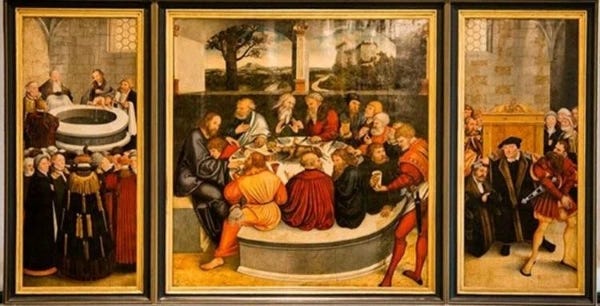
The Reformation
“Desiderius Erasmus ... the leading figure of the Northern Renaissance, is widely considered the greatest of early humanists. Five hundred years ago, he faced a populist uprising led by a powerful provocateur, Martin Luther, that resulted in divisions no less explosive than those we see in America and Europe today. ...
Beyond that immediate matter of dispute, however, their conflict represented the clash of two contrasting world views – those of the Renaissance and the Reformation. Erasmus was an internationalist who sought to establish a borderless Christian union; Luther was a nationalist who appealed to the patriotism of the German people. Where Erasmus wrote exclusively in Latin, Luther often used the vernacular, the better to reach the common man. Erasmus wanted to educate a learned caste; Luther, to evangelize the masses. For years, they waged a battle of ideas, with each seeking to win over Europe to his side, but Erasmus’s reformist and universalist creed could not match Luther’s more emotional and nationalistic one; even some of Erasmus’s closest disciples eventually defected to Luther’s camp. Erasmus became an increasingly marginal figure, scorned by both Catholics, for being too critical of the Church, and Lutherans, for being too timid. In a turbulent and polarized age, he was the archetypal reasonable liberal.” – Michael Massing, “Luther vs. Erasmus: When Populism First Eclipsed the Liberal Elite” The New York Review of Books (NYRB Daily), February 20, 2018. (emphasis added)
The European Reformation, traditionally beginning in 1517 with Luther’s “95 Thesis,” is a specific period of European history describing the violent Protestant revolt against the Catholic Church-legitimized imperial rulers that began in 1529 (and subsequent suppression attempts), when German cities and princes protested an edict of the Diet of Spires that was intended to destroy the Lutheran movement and ‘ended’ in 1648 at the conclusion of the Thirty Years War with the Peace of Westphalia that established many modern international norms such as international boundaries (e.g., Alsace was acquired by France, but Strasbourg remained an imperial free city until annexed in 1681 by Louis XIV), state sovereignty, non-interference in internal affairs, embassy exchange, and made religious choice a matter of each local prince or state. The Reformation ‘followed’ the Renaissance, was marked by the Wars of Religion (1524-1648), and preceded the Enlightenment (1648-1815) as taught in Western history.
“The biggest population shift in modern times has been the colonization of the New World by Europeans, and the subsequent destruction of Native Americans (American Indians).” – Jared Diamond, Summary of Guns, Germs, and Steel (2017) p. 9.
The New World, discovered a generation before Martin Luther nailed his “95 Thesis” (formally, “Disputation on the Power and Efficacy of Indulgences” written in reaction to the activities of Johann Tetzel26 to the church door, provided both a population outlet from The Reformation and a flood of wealth not tied to the “feudal system” or taxation of subjects for the competing Western European dynasties and factions, thus allowing the building of national armies, and other initiatives that eventually consolidated power to the central government, and away from the feudal lords, imperial free cities, and guilds. This wealth had the additional advantage of being unreachable by the Ottoman Empire or Central or Eastern European powers such as Poland, Austria and Russia (the Protestant Historical Coincidence comes into play here as well); Scotland’s belated disasterous colonization attempt in Panama, the Darien Scheme, compelled the 1707 Acts of Union.
Criticism of the indulgences practice – where the rich could do whatever they wanted, which led to the “95 Thesis” in 1517 was not new; Dante had complained in “Inferno” (the first part of The Divine Comedy (1320)) two centuries earlier of the grant of absolution of sin by priests as a recruiting tactic for the Crusades. Dante explicitly rejected the notion that a man could absolve another of sins, whether a clergyman or not, a pre-Protestant idea. Dante had personal enmity toward certain members of the Magisterium, most notably, Pope Boniface VIII, which then extended to challenges of Papal authority and Church practices in general (this issue was still not resolved five centuries later, e.g., Italian Freemasons such as Giuseppe Garibaldi and the Carboneria).
The difference between the two is this: The Black Death and the discovery of the New World in the two intervening centuries. Dante’s acrimony and criticism was bound up with his involvement in Florentine politics and exile. But he was still an Italian and was not a clergyman and thus was revered for his innovative use of Italian (instead of Latin) in his works. Martin Luther was an ordained clergyman (Augustan Friar) and a Doctor of Theology, and lived on the troublesome northern frontiers of the Holy Roman Empire in Germany. He translated the Bible into vernacular German, followed by translations into other languages over the next 50 years.
Desiderius Erasmus and Martin Luther were both Roman Catholic clergy critical of the Church and who sought to reform the Church, Luther was the more radical, outlawed reformist, while Erasmus, often called the “Prince of Humanist,” was a more moderate Renaissance humanist, still operating within the Church. Thus, in the two centuries intervening between Dante and The Reformation, criticism of the Church in all respects had moved from the political outside into the heart of the local clergy. And that is the Reformation.
Nuns on the Run
“There are monasteries where there is no discipline, and which are worse than brothels – ut prae his lupanaria sint et magis sobria et magis pudica [so that these brothels are more sober and more modest]. There are others where religion is nothing but ritual; and these are worse than the first, for the Spirit of God is not in them, and they are inflated with self-righteousness. There are those, again, where the brethren are so sick of the imposture that they keep it up only to deceive the vulgar. The houses are rare indeed where the rule is seriously observed, and even in these few, if you look to the bottom, you will find small sincerity. But there is craft, and plenty of it – craft enough to impose on mature men, not to say innocent boys; and this is called profession. Suppose a house where all is as it ought to be, you have no security that it will continue so. A good superior may be followed by a fool or a tyrant, or an infected brother may introduce a moral plague. True, in extreme cases a monk may change his house, or even may change his order, but leave is rarely given. There is always a suspicion of something wrong, and on the least complaint such a person is sent back.” – Desiderius Erasmus, Letter to Lambertus Grunnius (August 1516) (discussing the rule of celibacy in monastic orders).
The catalyst for reformation is the perceived ‘collapse,’ decay, and moral or in some cases, literal, bankruptcy of the old system (‘Ancien Regime’) leading to deep-rooted revolt against the preceding order, but should not be confused with a momentary political revolution, most revolutions don’t really change anything, only destroy, and then fade or flame-out before they can fully replace the old order. For example, the time period known as The Reformation was, in large part, a result of the collapse or decay of the Church-legitimized feudal system, a class struggle between the established nobility and royalty and the urban power of new aristocracy, merchants and nascent middle class, and up-and-coming powers, and ultimately, a social and political revolt against the deeply-corrupted Church (e.g., Tetzel’s sale of indulgences) which upheld and legitimized the old order.
Katarina von Bora was a Roman Catholic nun of the Cistercian convent of Marienthron (a/k/a Nimbschen Abbey near Grimma in Saxony, Germany) who took the profession of vows in 1515. With the help or involvement of Martin Luther, an excommunicated outlaw Catholic priest (1521), and a local fish merchant Leonhard Koppe, she and seven other nuns escaped the Convent on Holy Saturday 1523 and fled about 60 miles to Wittenberg (in Saxony-Anhalt).27 Frau von Bora (Frau is the modern German equivalent of Ms. in English) eventually married Martin Luther in 1535 and became the model Protestant wife, she was the last of the group to marry. As mentioned previously she died in 1552, fleeing the plague, six years after her husband died, and after fleeing the arrival of imperial troops occupying Wittenberg in 1547.
“There is no doubt about Martin Luther’s marriage, but the rumour about his wife’s early confinement is false; she is said however to be pregnant now. If there is truth in the popular legend that Antichrist will be born from a monk and a nun (which is the story these people keep putting about), how many thousands of Antichrists the world must have already!” – Desiderius Erasmus, Letter to François Dubois (13 March 1526).
If there is one case where we ought to be happy that the bell cannot be un-rung, it is that we have the critical writings of Desiderius Erasmus; the Church has not been able to un-ring Erasmus for 500 years. It is quite surprising that he was not ‘rung up’ on some heresy charge and dismissed or muzzled during his lifetime. Notably, though loyal to Rome, and awarded with permanent dispensations (not to be confused with indulgences), he always stayed a safe distance from Rome after 1506-1509, refusing prestigious positions there after seeing the worldliness and corruption of the Borgia-legacy Papal court six years after the death of Pope Alexander VI – any discussion of Church corruption always leads to Pope Alexander VI, “The Devil Pope,” and his son Duke-Cardinal Cesare Borgia and Captain General of the Church as the penultimate epitome; most of Erasmus’ published works critical of the Church were after 1509 – in 1535, he was offered a cardinalship to return to Rome but refused. In his travels through Holland, Belgium, southern England and northern France, he also, perhaps intentionally, avoided the hotbed of Protestant controversy, the German city-states and principalities and thus never met Martin Luther, who came to Rome in 1510 or 1511, but otherwise stayed in Germany his entire life.
Interesting Times
“The phrase ‘may you live in interesting times’ is lowest in the trilogy of Chinese curses that continue ‘may you come to the attention of those in authority’ and finish with ‘may the gods give you everything you ask for.’ I have no idea about its authenticity.” – Terry Pratchett. [Alternatively, Eric Frank Russell stated, “...and come to the attention of important people” in his 1950 short story, “U-Turn.”]
The anatomy of Church corruption: The seeds of the Reformation may have already begun as early as the ghastly Cadaver Synod in January 897, where the charges against the cadaver of Pope Formosus (they dug him up and put his cadaver on a throne for a trial) by his successor Pope Stephen VI (who was murdered in prison in August after an uprising) amounted to a Church declaration: 1) that the people have been corrupted if they express a preference to have a particular bishop rule them (Bulgarian ruler requested Formosus to be their Archbishop) and 2) that no one not approved by the church could practice ecclesiastical office (Formosus, then Bishop of Porto, had taken an oath renouncing his clergy status in 878, but became Pope). Yet, it was acceptable for political and ecclesiastical factions in Italy and European Catholic monarchs to determine by bribery, struggle, invasion, propaganda, murder, theft, adultery, and deceit, the next Pope of all Roman Catholics in the world (which until the Great Schism of 1054 still tentatively included the Eastern Church).
Then the French King got involved and seven French Popes instead lived in the Papal Enclave of Avignon, France, from 1309-1377 (the Avignon Papacy or “Babylonian Captivity of the Papacy”) leading to the Great Western Schism of 1378-1417 where the Church was divided between several claimants to the Papal tiara each backed by factions. And, 25-year-old Rodrigo Borgia, future Pope Alexander VI didn’t even have formal clergy training until after he was appointed Deacon-Cardinal of St. Nicolo in Carcere by his uncle, Pope Callixtus, in 1456; patronage, corruption and dynasty had so deteriorated system integrity.
Because the result of a reformation is the shift of the most fundamental wordviews of reality, a reformation involves conflict on many levels (political, economic, religions, etc.,) – the polite-sounding old saying “may you live in interesting times” (possibly coined in 1898 or 1936) – sometimes called “The Chinese Curse” (but it’s not Chinese) ironically was not intended to be a blessing – and reformation is only generally recognized in historical hindsight. To those in the present, it is a fearful cacophony of chaos portending the end of times.
Following the 1527 Sack of Rome by an uncontrolled Habsburg mercenary army28 – 630 years after the Cadaver Synod and 1,072 years (53 generations) after the Papal-negotiated ‘peaceful’ 455 Sack of Rome by the Vandals – the temporal power of the Papacy was effectively broken and literally bankrupt, and the spiritual power corrupt and diminished, leaving the Holy Roman Emperor Charles V and the rising power of France unchecked. Out of fear of the Habsburgs, the Pope was unable to restrain Holy Roman Emperor Charles V from dealing harshly with the Lutheran (Protestant) princes in Germany (the German Peasant’s War, the first ‘Protestant uprising,’ inspired by Martin Luther and backed by radical Anabaptists, whom Luther detested, occurred in 1524-1525) and with the burgeoning Reformation movement (e.g., Diets of Spires, Worms, Augsburg).
Additionally, the threat may have also convinced the Pope to refuse to annul the marriage of Henry VIII of England and Catherine of Aragon (d. 1536 of cancer or poisoning), who was Charles V’s aunt,29 resulting in the English break from the Roman Catholic Church and the subsequent English Protestant Reformation. King Henry VIII’s envoy bearing the divorce petition arrived in Rome in 1527, and would have been an eye witness to the Habsburg occupation. In 1529, the Pope forbade annulment without Papal approval; and annulment of Catherine of Aragorn’s marriage to the King, who was now the Supreme Governor of the Church of England, was granted by the Archbishop of Canterbury in 1533; in Roman Catholic history, Henry VIII is still guilty of bigamy.
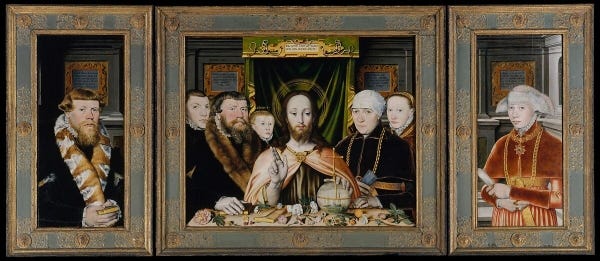
Understanding the Question
“It is hard for a human being to absorb ideas that are of first-order originality; such ideas, by definition, barely compute.” – Andrew Oswald, University of Warwick, contributor to, “The worst piece of peer review I’ve ever received,” Times Higher Education, August 6, 2015.
Dr. Mason, Dept. of History, Duquesne University, opined that Reformation era Catholics simply did not understand the question asked by the Protestants: How do I know I will be saved? To the Catholics of that milieu, one did not have a personal relationship with God, one had a relationship with the Church, which was God’s intermediary, the House of God on Earth, the Pope is the Vicar of Christ, and one was assured of ascension in the afterlife by being faithful, adhering to, and practicing Catholicism and being properly interned as a Catholic.30
The Protestants, on the other hand, were asking about their personal relationship with God because the Church was corrupt and mortal, how could it be a part of one’s relationship with God? The widely-known corruption of the Church implied both fallibility and gross insincerity – the Magisterium, Cardinals, Hierarchy, and Curia did not believe in either damnation, sin, or what they preached to the masses; they had become worldly (in the Biblical sense), flippant and privileged. Now, it may seem silly to us, with over half a millennia of historical hindsight that the Catholics did not understand the question, but this simply attests to the cultural and intellectual impact of Protestantism, and to the enculturation of ideas over time – the essential process of civilization at all levels.
One of the points of the Reformation (in relation to humanism) was to reestablish individual worth in the West, bypassing the Church in the human relationship with God or the universe; this process addressed a ‘craving for pride’ in the West, a concept developed by Eric Hoffer in The Awakening of Asia (1954) to describe mid-20th Century revolutions in Asia:
“In ‘The Awakening of Asia’ (1954) ... [Eric] Hoffer discusses the reasons for unrest on the continent. In particular, he argues that the root cause of social discontent in Asia was not government corruption, ‘communist agitation,’ or the legacy of European colonial ‘oppression and exploitation,’ but rather that a ‘craving for pride’ was the central problem in Asia, suggesting a problem that could not be relieved through typical American intervention.” – Wikipedia, “Eric Hoffer.” (emphasis added)31
A question similar to Protestant Question was perhaps asked by Rabbis to the Sadducees before the destruction of the Second Temple:
“Due to the First Jewish-Roman War, the destruction of the Second Temple ushered in a major time of dramatic reformation in religious leadership, causing the face of Judaism to change. The Second Temple served as the centralized location from which the ruling groups Sadducees and the Pharisees maintained Judaism, with rivaling Essenes and Zealots being largely in opposition. With the destruction of the temple, the major ruling group lost their power – the Sadducees, who were the priests, directly lost their localized power source and were rendered obsolete. Due to this, only one group was left with all the power – the Pharisees, who were the rabbinic group. The rabbinic groups’ power did not derive from the temple or from military prowess, which enabled their power to spread among synagogues to different communities.
This changed the way Judaism was practiced on a daily basis, which included changing from sacrificing animals to praying in order to worship God. Rabbinic Judaism became a religion centered around synagogues, and the Jews themselves dispersed throughout the Roman world and beyond. With the destruction of Jerusalem, important centers of Jewish culture developed in the area of Galilee and in Babylonia and work on the Talmud continued in these locations.” – Wikipedia, “Jewish-Roman Wars.” (emphasis added)
A theme of The Reformation was a return to early Christian forms, mainly communalism and a Rabbinic form of relationship with God.
Universal Reformation of Mankind
“THE original edition of the ‘Universal Reformation’ contained the manifesto bearing the above title, but which the notary Haselmeyer declares to have existed in manuscript as early as the year 1610, as would also appear from a passage in the Cassel edition of 1614, the earliest which I have been able to trace. It was reprinted with the ‘Confessio Fraternitatis’ and the ‘Allgemeine Reformation der Ganzen Welt’ at Franckfurt-on-the-Mayne in 1615. A Dutch translation was also published in this year, and by 1617 there had been four Franckfurt editions, the last omitting the ‘Universal Reformation,’ which, though it received an elaborate alchemical elucidation by Brotoffer, seems gradually to have dropped out of notice. ‘Other editions,’ says Buhle, ‘followed in the years immediately succeeding, but these it is unnecessary to notice. In the title-page of the third Franckfurt edition stands – First printed at Cassel in the year 1616. But the four first words apply to the original edition, the four last to this.” – Fama Fraternitatis [Reputation of the Brotherhood] extracted from the 1887 printing of The Real History of the Rosicrucians by Arthur Edward Waite.
The Rosicrucian Manifestos32 were published between 1614 and 1616 (before the Thirty Years War period), and the first of the three Manifestos actually used the term “universal reformation of mankind” thus, arguably, the term “reformation” was in use in a generally modern socio-cultural sense during the late years of The Reformation even if periodization naming is ex post facto.
“Not only did the Jesuits bring Christianity to China, but they also brought China to Europe. In doing so, they impelled an intellectual mutation that had been taking root since the Thirty Years War. To the troubled European society of the late seventeenth century, the Jesuit image of a near utopian civilization governed by moral sages uncorrupted by intolerance, passion, or material desire, offered a refreshing contrast. Kangxi was viewed as a philosopher king whose sense of justice and virtue made Leopold I or Louis XIV seem like moral pygmies. Europe swallowed fact and fancy about China. For the first time, a significant body of Western intellectuals cast doubts on the ethical superiority of their own civilization. Paradoxically enough, this was occurring at the moment when the very same thinkers were producing rational explanations about the physical universe that Eastern sages could not hope to match.” – Raymond Birn, Crisis, Absolutism, Revolution: Europe 1648 to 1789, 2nd Ed., p. 169.
Rosicrucianism is an early example of “an intellectual mutation that had been taking root since the Thirty Years War” and the doubts sown by “the Jesuit image of a near utopian civilization governed by moral sages uncorrupted by intolerance, passion, or material desire” described by Prof. Raymond Birn in his textbook about The Enlightenment. Jesuit missionaries had arrived in China in 1582 and had a mission on Macao in the 1560s; the Rosicrucians probably had heard the reports of China sent back by the Jesuits.
A Reformation of History
“The priesthood have, in all ancient nations, nearly monopolized learning. Read over again all the accounts we have of Hindoos, Chaldeans, Persians, Greeks, Romans, Celts, Teutons, we shall find that priests had all the knowledge, and really governed all mankind. Examine Mahometanism, trace Christianity from its first promulgation; knowledge has been almost exclusively confined to the clergy. And, even since the Reformation, when or where has existed a Protestant or dissenting sect who would tolerate a free inquiry? The blackest billingsgate, the most ungentlemanly insolence, the most yahooish brutality is patiently endured, countenanced, propagated, and applauded. But touch a solemn truth in collision with a dogma of a sect, though capable of the clearest proof, and you will soon find you have disturbed a nest, and the hornets will swarm about your legs and hands, and fly into your face and eyes.” – John Adams, The Letters of John and Abigail Adams [Letters to John Taylor, 1814, XVIII, p. 484].
Although there is a specific period of time that was named The Reformation, there is no basis to hold that this was the only ‘reformation’ of Western civilization of that magnitude. Thus, when there are at least two widely separated periods in Western history that could equally be called ‘Reformations’ with a capital “R,” a ‘reformation’ becomes a recognizable historical cycle rather than the singular historical period which it has been presented for the last several hundred years.
There probably have been many, smaller, more localized processes (was the human gain of “reproductive consciousness” a ‘reformation’ and if so, with a small or big ‘r’?), however, the one other event in Western history that reaches and perhaps surpasses the scale of The Reformation (as traditionally framed) – The Reformation would be properly called the Second Reformation – (deserving of a capital “R”) are the three centuries preceding and following the ‘fall’ of the Western Roman Empire, which signaled the final ‘passing’ of classical civilization. This I call the First Reformation (perhaps in the style of the First Pandemic, Second Pandemic, etc.); the Church, contrary to some belief, was not the cause of the Western Roman collapse (see previous Looking Substack Posts, “Macrohumanity 1: The Great Drama” and “Macrohumanity 2: Kairotic Moment.”), the symptoms were already present, but the phenomenal (and unprecedented) spread of the Church, far transcending the time and place of the events giving rise, through the areas of the late Roman Empire, the conversion of the Germanic, Turkic, Scandinavian, and Goth invaders (and later Romani), made the Church the major defining force of the new worldview during and following the First Reformation.
Interesting to compare circumstances: 1) The Reformation associated with the fall of the Roman Empire was a result of a combination of centuries of internal power struggles in the Empire coupled with massive invading human waves from the East and 2) The Reformation of Martin Luther was an internal religious strife stemming from centuries of Church corruption and abuse of clerical legitimacy amid abject European poverty, entangled with political and dynastic ambitions, class struggle and European colonization, while Europe also faced the threat of Ottoman military invasion, the first Siege of Vienna was in 1529 (two years after the Sack of Rome).
In this scheme, one might call the Rabbanic Reformation of Judaism after the destruction of the Second Temple, supra, ‘Reformation Zero’ which set the stage for – in combination with Roman Hellenization – the First Reformation (discussed in the January 4, 2026 Looking Substack Post, “Macrohistory 2: Kairotic Moment), just as the Seven Years War is sometimes called ‘World War Zero’ as the first globe-spanning European conflict.
Working definition of a reformation, stripped of specific historical context: A cyclic process of usually protracted societal shift, often leading to violent struggle between the significant minority and those who hold political and military power, for certain very fundamental changes that will eventually alter society (or the system) at all levels through future generations. A reformation is more than just a struggle for political power or legitimacy, or economics, in civilization, though all play a significant part, it is a struggle for the Human Reality.
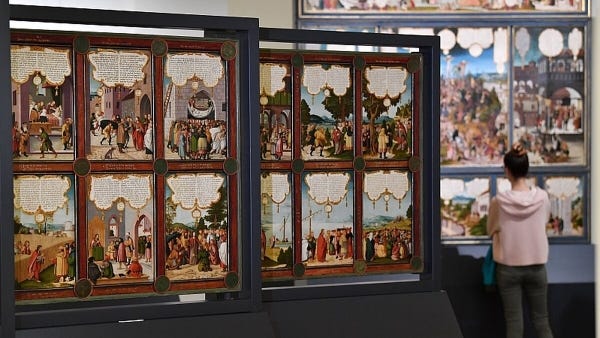
Neolithic Transformation
“Wild horses were domesticated in the Ponto-Caspian steppe region (today Russia, Kazakhstan, Ukraine, Romania) in the 3rd millennium B.C. Despite the pivotal role horses have played in the history of human societies, the process of their domestication is not well understood. ...
Based on ancient DNA spanning the time between the Late Pleistocene and the Middle Ages, targeting nuclear genes responsible for coat colorations allows [us] to shed light on the timing and place of horse domestication. Furthermore the study demonstrates how rapid the number of colorations increased as one result of the domestication. As well, it shows very clearly that the huge variability of coloration in domestic horses which can be observed today is a result of selective breeding by ancient farmers. Our modern human societies were founded on the Neolithic revolution, which was the transformation of wild plants and animals into domestic ones available for human nutrition. Within all domestic animals, no other species has had such a significant impact on the warfare, transportation and communication capabilities of human societies as the horse. For many millennia, horses were linked to human history changing societies on a continent-wide scale...” – Science Daily, “Mystery Of Horse Domestication Solved?” from Forschungsver-bund Berlin e.V. (FVB), April 24, 2009.
Reformations have been defined above as a prolonged multi-level struggle within a society that results in the shifting or change of ‘human-reality’; while reformations may be determined in hindsight, they are much deeper than political revolutions (revolutions may be part of a reformation though) in that few revolutions actually achieve their ideal goals and those that do are probably in accord with the shift caused by the reformation or end result, e.g., the United States of America, while the most extremist quickly flame out, e.g. the Anabaptists, French Revolution, Khmer Rouge, often with great destruction wrought. Conversely, “transformations” as discussed here are the emergent effect of the expansion of ‘macrohuman spaces’ which have and seemingly must be, accompanied by a diminution (removal) of distances effect (often accompanied by cultural homogenization33); pretty much, that’s history in a nutshell. As an analogy, it is like comparing Edward Soja’s discussion of the realities created by human spaces with a discussion (or science fiction story) of future human space colonization.
Neolithic domestication of the horse was a major transformation of human civilization (quite aside from general domestication of animals and advent of agriculture); it changed space and time for humans on Earth, bringing into contact groups that would have never met, tilling our fields, and pulling the heavy loads building the architecture of civilization. Two or three days of walking became a day ride on horseback (not to mention the horse is carrying all the weight, often supplies),34 a day ride on horseback is now an hour or two in a car on the highways between population blots on the land. River-going and coast-hugging boats (and later navigation on open waters) accomplished the same effect and could move big stones and lots of cargo with little effort. A similar effect has occurred through the late 19th Century to the present with mechanical travel (trains, planes and automobiles, ‘fly over country’), it is the root of what we now (and what some derisively) call globalization. It is the root of World War II.
According to Joseph Tainter, however:
“Complex feedback relations emerged among agricultural production, conflict, and complexity. Productivity fluctuations made military adventures tempting, even essential, while in turn military strategy came to influence agriculture. Dispersed, shifting swidden plots were essentially indefensible (at least at any reasonable cost), and yet were highly vulnerable and essential to subsistence. Concentrated, intensive systems, such as raised fields and terraces, were at the same time more easily defended (being compact, concentrated, and stationary) and productive enough to be worthwhile defending. The same consideration applies to centralized storage facilities. While it would be simplistic to suggest that warfare was the sole reason for agricultural intensification, it certainly made intensification that much more attractive.” – The Collapse of Complex Societies (1988), p. 604.
Thus, transformation and conflict play together through human history (this is hardly news to anyone who understands history), whether called reformation or not (see “Ode to Hegenomic Empires” discussion in the March 23, 2025 Looking Substack Post “The Empirical Historian Strikes Back”). The fullness of the space-expanding transformation brought by horses and wheels on the post-Neolithic world is expressed in the Great Migrations (see the December 14, 2025 Looking Substack Post, “Macrohumanity 1: The Great Drama”), and later in the conquests of nomadic steppe peoples from the Turkic Cumans to the Mongols. Although all of these space-expanding transformations (i.e., horses, chariots, wagons, boats, “planes, trains and automobiles”) have been appropriated in warfare and other struggles and/or caused them via contact and competition that would have not otherwise occurred, and certainly enabled them, none of them were, as far as we know, the direct result of struggle, rather:
“The history of sea power is largely, though by no means solely, a narrative of contests between nations, of mutual rivalries, of violence frequently culminating in war. The profound influence of sea commerce upon the wealth and strength of countries was clearly seen long before the true principles which governed its growth and prosperity were detected. To secure to one’s own people a disproportionate share of such benefits, every effort was made to exclude others, either by the peaceful legislative methods of monopoly or prohibitory regulations, or, when these failed, by direct violence.
The clash of interests, the angry feelings roused by conflicting attempts thus to appropriate the larger share, if not the whole, of the advantages of commerce, and of distant unsettled commercial regions, led to wars. On the other hand, wars arising from other causes have been greatly modified in their conduct and issue by the control of the sea. Therefore the history of sea power, while embracing in its broad sweep all that tends to make a people great upon the sea or by the sea, is largely a military history...” – Alfred Thayer Mahan, The Influence Of Sea Power Upon History, 1660 – 1783 (1890).
One could, of course, invent a mythopoeic origin heroic story set in the Neolithic age in the Pontic Steppes where the hero domesticates a horse to rescue his female companion and children who have been kidnapped by warriors of another tribe. Perhaps he first thinks that he can overcome their lead by riding the horse, but then discovers that the horse is also a weapon against which the opposing warriors on foot will not stand. The same sort of story could be written for the invention of the boat. Not saying it didn’t happen that way, but we have no record.
Diminution of Distance
“William Wilson’s location theory tries to give an explanation for the widening poverty and inequality gap. With rise of new technologies in recent decades, the new communication methods have allowed us to process and transmit information over great distances. This has, in a sense, destroyed distance. Distance no longer hinders communication as much as it used to. As a result, many businesses have relocated out of the inner city to the suburbs. Sadly, this leaves many ethnic communities stranded in the deindustrialized inner city. They are unable to take part in the sudden shift to information-based and service-based industry jobs.” –Wikipedia, “Fractal City,” citing to William Wilson, The Truly Disadvantaged: The Inner City, the Underclass, and Public Policy (1987).
Though subject of criticism and controversy, William Wilson’s removal of distance idea plays into the larger ‘spatial justice’ spectrum of Edward Soja:
“The normal workings of an urban system, the everyday activities of urban functioning, is a primary source of inequality and injustice in that the accumulation of locational decisions in a capitalist economy tends to lead to the redistribution of real income in favor of the rich over the poor. This redistributive injustice is aggravated further by racism, patriarchy, heterosexual bias, and many other forms of spatial and locational discrimination. Note again that these processes can operate without rigid forms of spatial segregation.” – Edward Soja, “The City and Spatial Justice,” JSSJ, January 2009. (emphasis added)
And, more broadly,
“Perfectly even development, complete socio-spatial equality, pure distributional justice, as well as universal human rights are never achievable. Every geography in which we live has some degree of injustice embedded in it, making the selection of sites of intervention a crucial decision.” Id. Soja.
The primary yardstick of human travel is time (Roger Caras) but we haven’t really conceptualized space as distance yet. The Milky Way Galaxy is approximately 100,000 light years (LY) across. Such a situation would mean that it would require 10 years at 10,000 light year speed (at best speeds, not counting any necessary stops or detours around the massive black hole in the center of the galaxy) for news, goods, and government actions or directives, to cross the Galactic Empire from one side of the Milky Way to another, going across the center (Traveller RPG often took advantage of realistic communication delays). In terms of the universe, 10 years is a millisecond of a millisecond of a nanosecond; but for human lives, and human governance, that’s an incredible amount of time to wait for anything, Penelope waited 20 years of Odysseus. My ‘ship of the imagination’ (a la Sagan) has crossed the Milky Way twice, out and back, and is on its way outbound again, approaching the other side of the center of the galaxy, since the day I started this project.
From this perspective then (‘space expanding transformations’), the invention of space travel, possible future planetary colonization and perhaps faster-than-light (FTL) travel in the future has two effects: It not only expands the space we can cover, but also expands the available space to be covered, like moving the fences in a baseball outfield to prevent home runs from being hit. This is different than all of previous human history: Human ability to travel distance has improved vastly, to the point that any place on the globe is just a day or two travel by air (taking into account waiting in the airport bar time), but the Earth is not now larger than it was in prehistoric times. On Earth, because of the current technology, the communication lag is almost negligible for news and directives transmitted electronically, and only a matter of days for the normal movement of goods and services even for the largest developed nations. The time-zone differences cause more delay – due to the human need for sleep – than any distance consideration. In the 19th Century, the delays could be weeks or even up to three months, but with less population density and lower overall complexity, remote central governance was possible.35
These fundamental transformations challenge the ‘working definition’ of reformation above (lacking fundamental change related to struggle), reformations have been entangled and dynamic with (as was The Second Reformation) or a subcategory of transformations but transformation is rarely a subcategory of reformation indicating that for now, on Earth at least, physical space is at an off-angle to ‘human reality’ (and I think that is what Soja was ultimately saying). In the Merriam-Webster online thesaurus, at transformation, “reformation” is considered a related word.
Bounds of Morality
“In general, describing the slave trader as hostis humani generis emphasized the idea that these crimes were offenses against humanity. One of the most important conceptual developments that led to the development of the contemporary international human rights regime was the idea that violations of human rights are of global and not just local concern.” – from abstract of The Slave Trade and Origins of International Human Rights Law, Ch. 6 “Enemies of Mankind,” Jenny S. Martinez, found on Oxford Scholarship Online, February 14, 2018.
The ability to sail the open seas around the globe was an explosive off-angle transformation of the macrohuman space of European civilization and eventually, all of human civilization. It is off angle in the sense that previous transformations from horses, wheels, and river and coastal boats were largely transformations in living space (“real estate”) space of humanity, whereas sea transit is not real estate, but more like the space between planets, lending a conceptual framework to space-based science fiction, which are often replays of the Age of Exploration and Discovery.
Perhaps the practical meeting place of reformation and transformation in the modern sense can be found in international law, hostis humani generis means “enemy of mankind.”
“International waters (also called “the high seas”) have their own customs and usage, rules and articles, and laws. Unlike the case with land, above the high-tide mark, where title, ownership, and sovereignty are created by law based around use and possession, no nation may claim as its territory the high seas, for continuous use and possession of them is impossible; as such, no nation may thus forbid trespass through the high seas. The high seas, since they cannot be owned by anyone, are held to belong to all humanity, and every nation is held to have a separate and equal right to have its ships navigate over them; this is the concept of mare liberum, or the freedom of the seas. As the sea is the common property of all, the perils of the sea and of navigation are shared by all mariners, and all nations. A law of amity and reciprocity holds among the seafaring powers, especially in regard to matters related to the protection of life and to a lesser extent, property; for instance, the law stipulates the obligation of every mariner to assist those who are shipwrecked, and the obligation of every harbormaster to provide safe harbor to any vessel in need during a storm, regardless of the flag it flies.
Perhaps the oldest of the laws of the sea is the prohibition of piracy, as the peril of being set upon by pirates, who are not motivated by national allegiance, is shared by the vessels and mariners of all nations, and thus represents a crime upon all nations. Since the time of the Ancient Romans, pirates have been held to be individuals waging private warfare, a private campaign of sack and pillage, against not only their victims, but against all nations, and thus, pirates hold the peculiar status of being regarded as ‘hostis humani generis,’ the enemies of humanity. Since piracy anywhere is a peril to every mariner and ship everywhere, it is held to be the universal right and the universal duty of all nations, regardless of whether their ships have been beset by the particular band of pirates in question, to capture, try by a regularly constituted court-martial or admiralty court (in extreme circumstances, by means of a drumhead court-martial convened by the officers of the capturing ship), and, if found guilty, to execute the pirate via means of hanging from the yard-arm of the capturing ship, an authoritative Custom of the Sea.” – Wikipedia.36
Morality can be thought of as the question of how people should behave (i.e. conduct) to do the least amount of harm to society. What is considered their society is an issue of boundaries (see also Peace of Westphalia, ut supra). To the early European explorers and colonist, the Native Americans (or even the people of Africa, India and China) were not within the boundaries of their civilization (see “Population Density” in the December 14, 2025 Looking Substack Post, “Macrohumanity 1: The Great Drama”).
“The tradition of classing the pirate as ‘hostis humani generis’ has been expanded to one other particular class of seafaring criminal, that of the slaver, who, by trafficking in human flesh upon the high seas, is similarly held to be in a state of war against all humanity. These treaties, as well as the customary international law, allow states to act similarly against slavers.
Although the tradition of privateering has been in decline over the past several centuries and international treaties are held to have abolished it, privateering, or the use of private ships as raiders of commerce of the enemies of the sovereign whose flag the privateer flies, is not considered piracy but warfare against a particular national enemy, and thus does not represent a crime against the customary international law, provided those involved adhere to the law of naval warfare.” Id, Wikipedia.
The notable shift then, especially pronounced after WWII and the shrinking (diminution) of distance due to technology (but began two centuries earlier), is that the boundaries shifted in the late 20th Century to include all of humanity as one theoretical entity (Erasmusian internationalism), and within the new boundaries, in historical hindsight, what the Europeans did to the Native Americans, was not just immoral, but horrific. The same has occurred to the Japanese; their persecution of Christians, who were not within the very strict boundaries of their civilization (into which they closed the gate for three centuries) was not considered immoral then. The shifting of boundaries in this way is a true example of a reformation.
The development of “international law” – especially in regards to human rights – is either an attempt to, or a result of (chicken or the egg came first?), moving the moral boundaries from sovereign states to global humanity.
One of the major issues that remain unsettled in the world is whether international law applies only to the relationships between nation-states or whether it also applies to the relationship of nation-states to humanity (some hold that there is no international law, only a set of treaties and agreements). For example, whether the leader of a nation can be held accountable for genocide against the inhabitants, citizens or indigenous populations of his or her own nation? For example, whether Putin would be arrested on the ICC Warrant if he visited South Africa or 124 other ICC members who signed the Rome Statute?
What is established by treaty can just as easily be cast aside when inconvenient, for example, the nations that drop from the International Criminal Court (ICC) when the Court issues charges against their leader or refuse to join, like the United States of America, China and Russia – like the United Nations (UN), the three “superpowers” have treated the ICC (and WIPO, WHO and other international entities) like a convenient tool rather than a restraining force and obligation to humanity (and the US owes the United Nations $4.5 billion in outstanding dues as of 2026, this has been a problem since at least the 1980s).
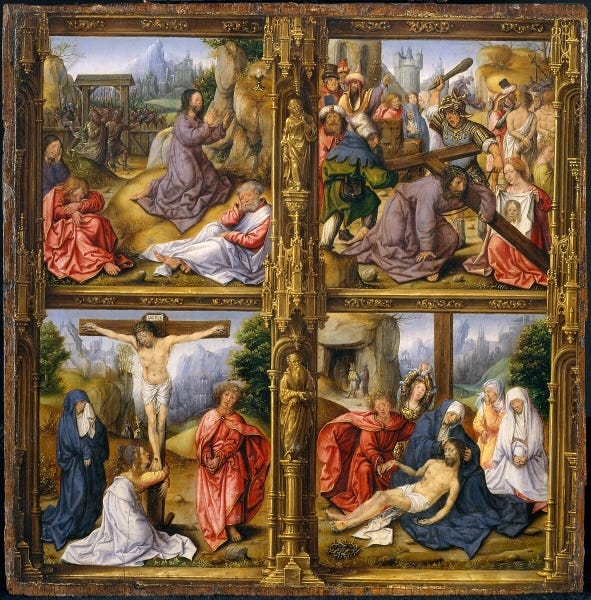
Twenty Chiliad
“A large factor in the worldwide occurrence of this flu was increased travel. Modern transportation systems made it easier for soldiers, sailors, and civilian travelers to spread the disease.” – Wikipedia article, “Spanish flu.” (a/k/a 1918 Influenza Pandemic) [Note: Epidemiology no longer uses national names for pandemics as it is considered discriminatory and misleading, thus COVID-19 was not called the Chinese Pandemic, for example.]
Arguably, the Age of Discovery (1418-1620) influenced the course of The Reformation (1517-1648), e.g., it provided an outlet for population to immigrate to the New World, and New World resources certainly financed Spain’s and to some extent, the Habsburg’s wars (and further colonization) against the Protestants (and France, England, and everyone else) in central and western Europe and across the globe from 370 leagues west of the Cape Verde Islands (giving the Azores Islands to Portugal) per the Treaty of Tordesillas (1494) with Portugal.
But it was much more than that. It was, and still is, a transformation that equals the Neolithic revolution. It was perhaps a once in a 20,000 year (or 20 chiliad) event. The ‘transformation’ wasn’t a reformation-like fight between Protestant rebels and imperial Catholics, it was the sailing ship, which transported people and horses over the watery majority of the Earth’s surface.
While regression and stagnation may occur on a local level or period of time, it seems overall the cultural and spatial ‘reality’ of macrohumanity has never receded, has never regressed (but may eventually stagnate if we can’t get off this planet in the next few centuries). Perhaps this is a function of sapience and the arrow or flow of time. European oceangoing sailing ships had the same magnitude of effect as the Neolithic revolution and the domestication of the horse. The disparity of realities is as good an explanation as any other of the half-millennia of European colonial domination and a much more interesting, perhaps Soja-Diamond-esque, angle on history, offering an explanation of why the current world feels orders of magnitude different than just a millennia ago.
Since I have defined “reformation” here as a protracted, multi-level ‘struggle’ for Human Reality, and “transformation” as the emergent effect of the expansion of macrohuman spaces intertwined with necessary diminution of distances, a third term would be needed (on the extremely low probability that it ever happens) to describe true human expansion in time, perhaps as suggested by the movies Arrival (2016) and The Time Traveler’s Wife (2009). Some clever neologism wit will find a suitable word that sticks, for the purposes of this discussion, the idea is mentioned here for completeness.
Post-Apocalyptic Reality
“This you know: the years travel fast, and time after time I done the tell. But this ain’t onebody’s tell. It’s the tell of us all, and you’ve gotta listen and to ‘member, ‘cause what you hears today you gotta tell the newborn tomorrow. I’s lookin’ behind us now into history back. I sees those of us who got the luck and started the haul for home, and I ‘members how it led us here and how we was heartful ‘cause we seen what there once was. One look and we knewed we’d got it straight. Those what had gone before had the knowin’ and the doin’ of things beyond our reckonin’ – even beyond our dreamin.’ Time counts and keeps countin,’ and we knows now: finding the trick of what’s been and lost ain’t no easy ride, but that’s our track. We gotta travel it, and there ain’t nobody knows where it’s gonna lead. Still in all, every night we does the tell so that we ‘member who we was and where we came from. But most of all we ‘members the man who finded us, him that came to salvage. And we lights the city, not just for him, but for all of him that are still out there. ‘Cause we knows there’ll come a night when they sees the distant light and they’ll be comin’ home.” – Savannah Nix, ending narration, Mad Max: Beyond the Thunderdome (1985).
The essence of the Cold War zeitgeist was the dawning realization that we were living on the edge of a manmade historical accident to tip us into the abyss. We still are. Nuclear weapons aside, do you think we can handle a truly existential global pandemic (of the movie kind) and/or rising seas from manmade climate change and massive coastal population displacement? During the Black Death people died so fast they could not bury them properly and in some places, civil society nearly collapsed.
“Collapse may also manifest itself in a transformation from larger to smaller states, from more to less complex chiefdoms, or in the abandonment of settled village life for mobile foraging (where this is accompanied by a drop in complexity).” – Joseph Tainter, The Collapse of Complex Societies (1988).
Stark reduction in the macro-reality of humanity to the stone ages or to some sort of neo-medieval agrarian setting is a common feature of post-apocalyptic fiction. While not often explicitly stated – usually presented as a return to barbarism, superstition and ignorance – it is what you feel most strongly in those settings – nascent global civilization smashed like a pumpkin, the pieces of our current world laying on the ground. The difference from a character in historical fiction is that the post-apocalyptic characters know on some level that human reality has receded, shrunk, and in most cases, that we did it to ourselves (i.e., we effectively gave ourselves a lobotomy). This is what makes post-apocalyptic settings unsettling to the modern audience.
“Transformation” as described here may serve as a partial or general explanation for 20th Century car culture and the urge to travel in any era; loss of vehicle, or confinement to home (and isolation) whether voluntary or not or due to age or childrearing, or even cloistering or incarceration, long-term hospitalization, feels different shades of “apocalyptic,” a stark reduction in our personal space in the world. The United States Supreme Court has determined that the right to travel is a penumbras right derivable from the rights enumerated in the Constitution and the Bill of Rights (not to be confused with any “right” to drive a car, which is a revocable privilege).
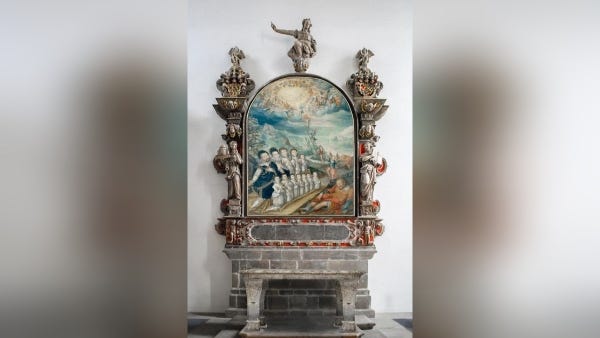
Eras
“They will have time enough, in those endless aeons, to attempt all things, and to gather all knowledge ... no Gods imagined by our minds have ever possessed the powers they will command ... But for all that, they may envy us, basking in the bright afterglow of Creation; for we knew the Universe when it was young.” – Arthur C. Clarke, Profiles of the Future (1962).
Eras in my ‘macrohumanity vision,’ represent a combination of reformations and transformations over an extended period that result in change measurable in orders of magnitude and/or vast differences and levels of complexity; the peoples arriving in Europe during the Great Migration met the Roman Empire failing under its own weight and absurdities, in a world that was changing, and an explosive new religion leading to what I have called the First Reformation at the end of Antiquity. While the term can be generally applied, technology is the most immediately understandable example. Eras represent a sort of ‘other side of the event horizon’ from the view of the preceding age, had they reason to speculate.
Suppose I decide – somewhat arbitrarily – that the ‘First Era’ of human technology ended in 1850 – the word “technology” came into our language in 1859 per Merriam-Webster online dictionary – and thereafter began the ‘Second Era’ which we are in currently. Under that division of human history, what would be the defining technology or development that sets the Second Era apart from the First Era that gives Second Era technologies that almost extra dimension that makes First Era technologies not only obsolete, but quaint and clunky in hindsight?
One must be careful in retroactively applying modern concepts. For example, we refer to prehistoric technology of which prehistoric people clearly had no collective concept. To them, it was something else, magic or spirits perhaps, perhaps a reason to make up an origin myth. Commonly, we are rather careless in retroactive application, other examples discussed previously include modern concepts of evil, empiricism, smiles, passion/emotions (discussed in the February 22, 2026 Looking Substack Post, “The Human IF 1: Interpretations & Fuzzy Groups – The Interpretation Game”), and technology, feudal, feudalism, feudal society and renaissance, reformation, and Middle Ages or Dark Ages (supra).
The defining event of the ‘Second Era’ would be the understanding of electricity, and the development of technologies to utilize, generate, and transmit electricity. Napoleon used the Chappe semaphore (optical) telegraph starting in 1799, on the eve of the change from my arbitrary First Era to the Second Era. The most famous inventions of the 19th Century were almost all based on the use of controlled electrical current (including the internal combustion engine, invented in 1860) – technology based on ‘controlled lightening’ harnessed by human ingenuity, and by the 1950s the world moved from electrical engineering to electronics – the pioneers of the modern computer were two electrical engineers and a mathematician pushing the edge of electric technology.
Now, were I to speculate on what development might be the defining element moving humanity into a hypothetical ‘Third Era,’ I wouldn’t have much of a clue, but like so many before me, I would speculate that it would probably have to do with the invention of a new space propulsion system (and the principles that would be involved would revolutionize other technology areas followed by society) and/or intelligent machines. Others might speculate that it would be the development of a Unified Field Theory that revolutionizes the world’s technology and society (e.g., the movie Interstellar), still others might look to the quantum (e.g., quantum computing, quantum communication) for the next era emergence.
On the exponential progress of technology, perhaps an analogy: we can only see the shadow of a hypercube in three dimensions, a hypercube exists in a direction we cannot point to. It is thus that I know what the difference in eras should look like, but could not have predicted – short of god-like omniscience and a clockwork universe – the new direction that technology has taken from my hypothetical First Era to the Second Era. That effect/difference, what I called “Uber Alles,” is simulated abstractly in Gestalt-Genesis/Day Million (“GGDM”) macrosocial simulation game and in science fiction – without needing to define the technological details.
Bulwarks of the Past
“The French and Hussites had already demonstrated the power of artillery in the field, and now the fall of Constantinople gave proof that the mightiest walls no longer offered a refuge against gunpowder. Yet that May morning in 1453 is remembered as more than a tactical landmark. For a last spiritual link with the ancient world had been broken, and henceforward men would feel free to turn their eyes toward the future rather than the past.” – Lynn Montross, War Through the Ages (3rd Ed., 1960), p. 195.
Constantinople was the most powerful city in Europe of the Middle Ages. The Crusades passed through and became entangled in Constantinople, the Fourth Crusade attacked and sacked the city in 1204 A.D., destroying or carrying off countless historical treasures that are now lost. Constantinople was the last link to the Roman Empire and the Classical Ages; it could be considered a Symbolic Constructural Element in my ‘macrohumanity vision’ within the worldview of ‘feudal Europe’ (see the July 20, 2025 Looking Substack Post, “Constructural Elements: Building Your Worldview”). Ottoman conquest of Constantinople in 1453 (renamed Istanbul in 1930) also provided a gateway to Europe allowing the Ottomans to conquer all the way to Hungary; the Habsburg-Ottoman-Polish contest over two centuries shaped modern Central and Eastern Europe, especially Romania.37
The use of “era” in English to represent a distinct historical period (i.e., periodization, e.g., Victorian Era, Roman Era, Colonial Era) developed around 1740, but the word had been in English since about 1615 with the meaning of chronological systems, and by 1640, meant also the starting date of an age (from Google AI). It is an East Asian tradition to define their history in periods or eras, or by the names of rulers, we do something similar semi-formally, e.g., “Nixon era” or “Vietnam era.” However, the Chinese era-based calendar system, the tradition of naming years by the ruling dynasties or imperial eras, began in 140 B.C., far earlier than European historical periodization (which developed independently for different reasons described above) and spread to Vietnam and Korea by the 6th Century AD and to Japan in 645 and 701 A.D; Japan still officially uses an imperial era-calendar system while China adopted the Western calendar. Thus the concept of “eras” far predates the appearance of “technology” in English in about 1859 and is casually used in conversations that have nothing at all to do with technology. For the purposes of designing a game in a science fiction interstellar setting though, I simply linked eras to technology in socio-technological ‘uber-alles’ (infra).
A Dying Age
“The pomp of chivalry had increased in proportion to its weakness, and at Agincourt in 1415, the French host of 40,000 was literally an army with banners. But even though a pennon or standard fluttered over every contingent, the display only served to commemorate one of the last great efforts of a dying feudal age.” – Lynn Montross, War Through the Ages (3rd Ed., 1960), p. 182.
Historical, fantasy, science-fiction, sports and socio-political writers love to use “era” and “age” (Babylon 5 intro, “It was the Third Age of Mankind...”), and less often, “epoch” which is a bit paleo, instead of formal periodization because they are suitably humanly “fuzzy” as opposed to rigid, arbitrary chronological periodization and they imply or incorporate zeitgeist, can more easily overlap, while also maintaining a ‘romance’ of history; I have commented that Lynn Montross is Cicero’s “orator” of military history.38
All of the things that we know gradually and collectively marked the end of the Middle Ages would not have been apparent to the combatants at Agincourt as they trudged through the mud on a soggy cool fall day in 1415. Not one person present would have had reason to think that the world as they knew it would not go on forever (or at least into the time of their grandchildren’s children, which is the same as forever for most people) unchanging.
There were reportedly some primitive cannons and handguns at Agincourt, but not enough to be more than a noisy curiosity. The walls of Constantinople were yet to be battered down by Turkish cannons (in 1453), rendering all castles and fortified cities in Europe vulnerable to the same fate as the power of cannons improved over the next century (and leading to the centralization of government power). The Portuguese had not yet reached India (in 1498), and as we all learned in school, Columbus had not yet discovered the New World (in 1492). The War of the Roses was still 40 years in the future, two generations hence. Sir Francis Bacon wasn’t to be born for another 145 years, and his vision had to wait another century after his death in 1626 to emerge.
The events that might have been worrisome to the sages in 1415 would have been the Black Death, which passed through France, reaching England in about 1349-1350, a dark, continuing nightmare for which there seemed no cure and no end. The very concerning Western Schism of the Papacy (1378-1417) was finally nearing an end in 1415. And the last part that would have concerned the sages of the day, the Ottoman advance into the Balkans (Gallipoli, 1354, Adrianople 1402) around the ailing, feeble Byzantine Empire, and the ultimate failure of the Crusader States in the Holy Land (Acre, 1291) to the Mameluke Sultanate.
So here we have a balance of things true in all times: 1) Those things that would have been the worldview of the participants on the ground at the time, 2) Those things that we know from hindsight, that historians glowingly state led inexorably to the end of the age or era in question, and 3) Those signs and events that would have been known and worrisome to the wiser and more educated minority of the time.
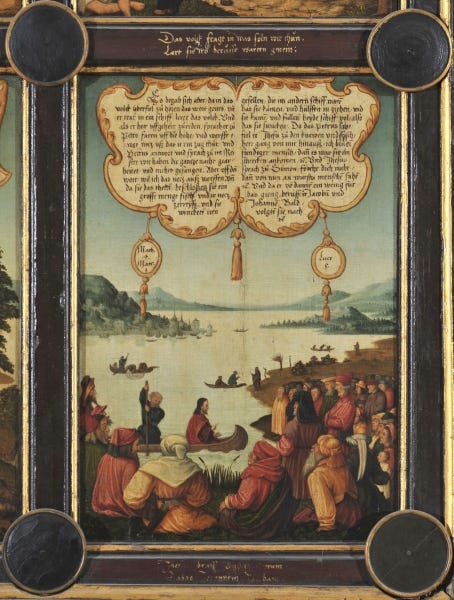
The Blurry Lines of Progress
“You never change things by fighting the existing reality. To change something, build a new model that makes the existing model obsolete.” – Buckminster Fuller, 1983 interview by Mike Vance for Think Outside the Box (1995) by Vance and Diane Deacon (per Quote Investigator article, August 18, 2024).
“This seems to be the law of progress in everything we do; it moves along a spiral rather than a perpendicular; we seem to be actually going out of the way, and yet it turns out that we were really moving upward all the time.” – Frances E. Willard, A Wheel Within a Wheel (1895).
There is no bright line or singular event that defines 1850 as the year that humans on Earth passed from one technological era to another, nothing special at all about 1850 A.D. (or B.C. for that matter). Lines and retroactive terms are things imposed in historical hindsight (e.g., terms such as ‘feudal’ or ‘the Middle Ages,’ supra), whereas, the actual course of progress is like a drunken person staggering forward in a blur.
“A society has collapsed when it displays a rapid, significant loss of an established level of sociopolitical complexity.” – Joseph Tainter, The Collapse of Complex Societies (1988), p. 17.
Thus, while medieval Western and the Mediterranean Europe can arguably be characterized as a Tainter collapse on the most massive scale as compared to the Roman Empire (plus the loss of the knowledge of concrete), in terms of “eras” that is nearly irrelevant and social “progress” is blurry business, certainly the medieval Christians thought their growing religion had progressed beyond the Roman Empire, outlasting and overcoming their arch-enemy.
The word ‘progress’ is fraught with controversy, as indicated perhaps by the fact that there are political parties and movements in most nations who call themselves ‘progressives’ and are opposed by those who don’t call themselves ‘anti-progressives,’ but prefer the warm fuzzy term ‘conservative’ instead – or ‘ultra-nationalist’ nowadays, wherever progressive thought is associated with urban globalism and multi-culturalism. There are philosophical and scientific issues where ‘progress’ is linked to teleological thinking. But when I say that I am progressing down the page, no controversy exists as to what is meant and whether this is good or not.
After all that said, ‘progress’ is in the simplest, neutral sense defined by Merriam-Webster online dictionary at progress:
“(n): 3: gradual betterment; especially: the progressive development of humankind, and progress (v): 2: to develop to a higher, better, or more advanced stage.”
I must assume then that I am being bettered by progressing down the page or that I am developing a higher, better or advanced stage by advancing down the page. Is “aging” a betterment, is it considered ‘progress’ when it achieves an “advanced stage?”
Electric Uber-Alles
“... we cannot predict the new forces, powers, and discoveries that will be disclosed when we reach the other planets or can set up new laboratories in space. They are as much beyond our vision today as fire and electricity would be beyond the imagination of a fish.” – Arthur C. Clarke, “Space and the Spirit of Man,” (1965) in Greetings, Carbon-Based Bipeds! Collected Essays 1934-1988 (1999) (verified by Arthur C. Clarke Institute for Space Education in partnership with the Arthur C. Clarke Foundation).
“Uber-Alles” is a German phrase that means “above or over everything else” – not a pair of overalls. Here the term represents an intangible quality or dimension, due to the combination of the discovery of physical laws and the accumulation of technological applications such that their combined effect advances technology by an order of magnitude, and the changed worldview that results. For example, the marked human-reality-altering change in human time keeping and cognitive sense of time discussed in the January 25, 2025 Looking Substack Post, “Human Time: The Building Core of Human Meaning.”
The fictitious “Holtzman Effect” (probably a play on Ludwig Boltzmann) is the scientific principle that powers all of the technologies of the Dune Universe from ships “folding space” to personal shields and anti-gravity suspensors. It has the “fuzzy” advantage of never being defined therefore it can be whatever is necessary.
During the design of Gestalt Genesis/Day Million (“GGDM”) macrosocial simulation game, I had to find a means to distinguish by orders of magnitude the power differential of technologies of the 1st, 2nd, and 3rd, Eras in the game; the 1st Era being distinguished from pregame planetary technology (“Zeroeth Era”) by the invention of Faster Than Light drive (frequently called “Stardrive” in science fiction, a much more appealing term) as mentioned above. This difference is often displayed in time travel movies or in such as The Gate (2015-2016) anime series, or in the dog fight sequence between 4th-generation 1980s combat jet fighters and 1st-generation monoplane Japanese A6M2 “Zeros” in The Final Countdown (1980). There has been a lively debate whether the USS Enterprise in the Final Countdown could have single-handedly defeated the entire Japanese navy of 1941, just as a WWII carrier could probably have destroyed an entire nation’s navy in WWI. Und so weiter.
My struggle to find a solution resulted in the concept turned into a game mechanic that I called the “Uber-Alles,” to globally distinguish the vast gulf of technological differences which are often not well done in other games of this sort, beyond the obvious technology gadgets and military prowess seen in movies and video games. The Uber-Alles that separates our current era from the technologies that we consider “primitive” is electrical generation, transmission, control and use – the electrical technologies “uber alles,” among other things, make our world orders of magnitude different from the world of the Middle Ages or even 1648 when it would have been called magic or witchcraft by a paranoid Little Ice Age, Black Death, war-ravaged Europe.
The fact that I can use Google AI on my phone as a hand-held instant research assistant, is an emergent social effect from the uber-alles effect: to a pre-modern person would it whom it seem as though I possess god-like knowledge when in fact, I simply possess a plastic chunk of technology that it part of a larger infrastructure and the understanding, cognizance to ask the correct questions to an artificially-intelligent search engine.
Uber-Alles, as I developed the concept in GGDM, is not solely an expression of differences in technological prowess of Eras in some cheesy sci-fi movie gadget sense, but are intended to represent, in concrete application terms, the exponential effects (and exponential progression) across society, politics and economics of orders of magnitude of era-level changes over time (necessarily technology-driven in a science fiction setting), a wholistic phenomenal representation. Uber-Alles are like trying to concretely define the ramifications of Vernor Vinge’s Technological Singularity, discussed in the February 22, 2026 Looking Substack Post, “The Human IF 1: Interpretations & Fuzzy Groups – The Interpretation Game”; like most things, it works better in hindsight, history is a posteriori empirical science. That’s the best my caveman brain can do with a fuzzy concept of this magnitude.
Writer’s regrets, I am still not sure I handled it exactly correctly in the game design – or at least, maybe I could have found better mechanics – and maybe that is for the future players, if any, to fix. I also wish I had used the Holtzman Effect from Dune as a good example of Uber Alles, at this point, any sort of ability to travel interstellar distances within a human time frame would be transformative (supra), orders of magnitude above our current technology – that is the distinction I made between pre-game planetary technology and the 1st Era of Technology in GGDM, analogous to the massive global advantages of European oceangoing sailing ships during the Age of Exploration:
“These affirmations of Asian priority are especially prominent and urgent nowadays because a new inversion is bringing Asia to the fore. A ‘multicultural’ world history finds it hard to live with a eurocentric story of achievement and transformation. So a new would-be (politically correct) orthodoxy would have us believe that a sequence of contingent events (gains by Portugal and then others in the Indian Ocean, followed by conquests by Spain and then others in the New World) gave Europe what began as a small edge and was then worked up into centuries of dominion and exploitation. A gloss on this myth contends that a number of non-European societies were themselves on the edge of a technological and scientific breakthrough; that in effect, European tyranny (to paraphrase Thomas Gray’s “Elegy Written in a Country Churchyard”), ‘froze the genial current of the [Asian] soul.’
...I shall return later to this revisionist debate. Here, suffice to say: 1) The Portuguese success was the result of decades of rational exploration and extension of navigational possibilities in an ocean (the south Atlantic) that was hostile to traditional techniques of navigation, which essentially involved following the coastline. This technological enhancement rested in turn on a systematic utilization of astronomical observations and calculations, taken from the Muslims and transmitted largely by Jewish intermediaries, which allowed the Portuguese to follow winds and currents across the south Atlantic, and then use a knowledge of latitude to swing back around the tip of Africa and into the Indian Ocean. 2) The Chinese abandonment of westward exploration was partly the result of contingent political events; but at bottom it reflected the values and structures of Chinese society and civilization. 3) European exploitation of the breakthrough rested on a disparity of power technology (better powder and better guns) as well as on navigational superiority. The extension of European power into other parts of the world was the expression of these and other disparities. Why other regions did not keep up with Europe is an important historical question, for one learns almost as much from failure as from success.” – David S. Landes, “Why Europe and the West? Why Not China?” Journal of Economic Perspectives, Volume 20, Number 2, Spring 2006. [Note: this also serves as Landes’ counterargument to the charge of Eurocentrism in history.]
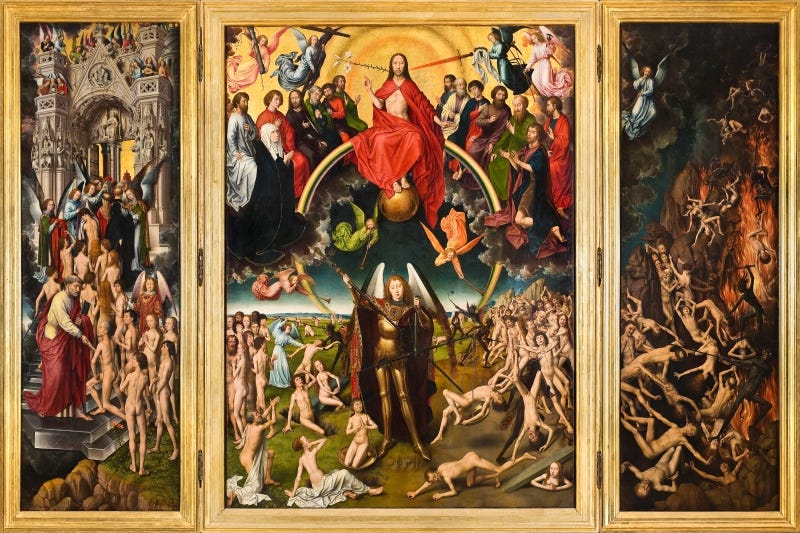
Transhuman Touchdown
“It is no longer enough to see as a man sees – even to the ends of the universe. It is not enough to hold nuclear energy in one’s hand like a spear, as a man would hold it, or to see the lightning, or times past, or time to come, as a man would see it. If we continue to do this, the great brain – the human brain – will be only a new version of the old trap, and nature is full of traps for the beast that cannot learn.” – Loren Eiseley, “The Hidden Teacher,” The Unexpected Universe (1969).
“We’re not meant to save the world, we’re meant to leave it.” – Cooper in Interstellar (2014).
Like the oceangoing sailing ship, the ability of humans to consistently and reliably reach the stars within a reasonable human timescale (probably combined with the approaching Technological Singularity), would trigger reformation and transformations eventually amounting to an era change on the scale described in the rare science fiction transhuman gem, Frederik Phol’s “Day Million” (1966). It is this distinguishing concept that led me to add the tributary term “Day Million” to “Gestalt-Genesis” in the title of my work, “Gestalt-Genesis/Day Million” (GGDM) to express the visionary break with standard science fiction trope and hobby game design thinking.
It seems a likely possibility that in order to travel at faster-than-light (FTL) speeds – that is, to be able to reach Alpha Centauri in days or hours rather than decades or centuries or millennia – humans would first have to become something else ... post-human (H+) ... that the current form of provincial Earth-bred biological humanity is not suited to interstellar travel and colonization. That is, there may be an epochal connection between FTL travel and transhuman evolution, either as a prerequisite of one for the other, or causally-related result of one from the other; the Carl Sagan movie Contact (1997) seems to suggest this from the concept of wormhole travel, as does Interstellar (2014).
“Once you are a parent, you’re the ghost of your children’s future.” – Cooper in Interstellar (2014).39
In the 2018 short story “The Lantern” by Exurb (a/k/a, Exurb1a, available in years past in audio on YouTube, 14 minutes), ‘Lanterns’ are humans who are intentionally mutated specially to function in ‘E-space’ which human ships use in transit between the stars (like the Navigators in Dune). In E-space, neither human minds or computers work normally, so human passengers are cryogenically frozen (“Human Popsicles,” infra) and the ships are manually steered and controlled by Lanterns (they are no longer human really), who sit in the forward bubble of the ship. Lanterns can see past and future by virtue of their mutation and exposure to E-space, human interstellar culture entirely depends on them (similar to Norman Spinrad’s misnomer Void Pilots, except that they don’t “steer” the ship). The Lantern in the story indicates that humans will not need Lanterns in about 3,000 years.
Temporal Alpha Decay
“It is all a matter of time scale. An event that would be unthinkable in a hundred years may be inevitable in a hundred million.” – Cosmos, p. 73.
If any higher SQ (Sentience Quotient) extraterrestrial (in our dimension) or extradimensional intelligences are watching, the current invention of technology and materials science allowing faster-than-light (FTL) travel by humans would be comparable to the spontaneous invention of an internal combustion engine by a toddler. Or by someone from the year 1066 A.D. It is not impossible, it is just extremely, in the most extreme sense, unlikely, perhaps a once in a ten-million year leap outside the potential energy well, a temporal alpha decay (“quantum tunneling”) – I watched a documentary one holiday season explaining Nicholas Allan’s theory of how the Shroud of Turin could have been created by a primitive ‘camera obscura’ based on available Roman-era technology and materials. Yet, there are news reports that NASA “may” have invented a FTL drive and it is widely known that physicist Miguel Alcubierre, inspired by Star Trek, proposed a theoretical model for a real-world ‘warp drive’ in 1994.
And the universe is over 13 billion years old, the sun over 4 billion years. The universe is vast, how many interstellar civilizations are out there? Well, that depends on who you ask and how the Drake equations are modified and what assumptions are made, playing with numbers. If humans invented ‘stardrive’ (FTL) anytime in the next million years – that would be about two million years after human predecessors began using (not making) fire (Peking Man used fire 770,000 years ago) and a million years after the Bomb – we’d likely be well ahead of the probability curve.
“The brave explorers or colonists set out in their spaceship to spread humankind to the stars. You can’t travel faster than light, so they’re going to spend most of the trip on a Sleeper Starship as Human Popsicles, or it’s a Generation Ship and it’ll be their descendants who step out at the other end of the trip. Either way, they’re saying goodbye forever to everyone and everything they know. Decades and centuries pass, and eventually they arrive at their destination – and there’s people there waiting for them.
Turns out, Faster-Than-Light Travel (or at least sublight travel that is vastly faster than theirs) is possible, and it got sorted out while they were in transit. Now the same trip that took them centuries can be done and be back in time for Christmas. And that planet you were all set to colonise? Done already, and actually we’re not sure there’s any room for you... Expect the brave pioneers to be upset about this.” – TVTropes.com, “Lightspeed Leapfrog.”
Starry Messengers & Monsters from Afar
“Who would once have thought that the crossing of the wide ocean was calmer and safer than of the narrow Adriatic Sea, Baltic Sea, or English Channel? Given ships or sails adapted to the breezes of heaven, there will be those who will not shrink from even that vast expanse.” – Johannes Kepler, Translated by Edward Rosen (1965), Kepler’s Conversation with Galileo’s Sidereal Messenger (1610), p. 39.
To avoid addressing the epochal transformation or hundreds or thousands of years of sub-light travel, and to keep the story accessible to the audience, science-fiction writers usually take the highly unlikely ‘temporal alpha decay’ above to give humans FTL travel in their current, defective state. This is the science fiction writer’s in-joke in the Stargate SG-1 series where an advanced alien visitor insisted that humans (with late 1980s, early 1990s technology) could not have learned to operate the Stargate on their own, it is also the backbone of Star Trek, e.g., Cochran’s invention of the Warp Drive in the post-apocalyptic wreckage of WWIII, and dozens of (in fact, nearly all other) science-fiction stories involving humans, technological alien civilizations and interstellar colonization.
All of this is a continuation of the “European mania for tinkering” (Landes, supra) and exploration that became science, technology expressed in science-fiction colonization. It is not surprising then that science-fiction literature does not do well outside the West, with the exception of Japan, because Western science-fiction genre does not have a basis in their cultures. Many thus see science-fiction genre as a continued form of racism and/or global enculturation of European ideals, with the stories and future settings replaying 17th-19th Century European exploration, colonialism, and East-West relations and European-African relations, Eurocentric historiographies, along with the technological inversion and Columbian Exchange.
“For every species bar one, Medieval Stasis is how the world works. Changes in technology and society take hundreds of years, and any existing alien civilization or elf kingdom today looks more or less the same as it did a century ago – or will in a century more. For most races in the setting, slow change is the norm. The great exception are humans. Somehow these talking plains apes, who have only learned to walk fully upright a few hundred thousand years ago, have mastered technology and civilization in a fraction of the time it took everyone else, despite their incredibly short individual lifespans. Or maybe it is that very brevity that drives humans, the sense that they don’t have decades to spare and need to accomplish things now. Or the rapid generational turnover means that once we become set in our ways we don’t last long enough to impose our views on successors still young enough to be open-minded to new ideas.” – TV Tropes.com, “Humans Advance Swiftly.”
“Medieval Stasis” – born of a Petrarch-Sagan view of the Middle Ages as a “dark age” – also provides the credible intellectual basis for human adventurers to radically upset the existing galactic order, become a threat to the galaxy, and prove more dangerous and intelligent than all other races combined, e.g., Mike Resnick’s 1982 short-story arc anthology novel, Birthright: The Book of Man where we were the monsters, like the European colonizers of history. Trekkers know it:
“If Star Trek has taught us anything over the years, it’s that pacifism, diplomacy and mutual understanding are the greatest weapons in any explorer’s toolkit. But that doesn’t mean you shouldn’t also carry a phaser, just in case...
Who else could top this list more convincingly than humans? They defeated the Borg. They fought the Klingons into submission. They sent the Dominion back where they came from. And all the while, they did it while insisting to their enemies that they were only interested in peace, exploration and a nice cup of tea (Earl Grey, hot). There isn’t a quadrant in the galaxy that’s pleased to see a human turn up. And if nothing else, the Mirror Universe first (‘Mirror, Mirror,’ TOS 2.10) shows us that humanity has the potential to conquer the galaxy if only they get riled enough. No wonder the Vulcans spent so long trying to keep us down. It’s the only logical response when faced with a race with so much destructive potential.” – “Ranked! Star Trek’s 25 deadliest races, from the Romulans and Q to the Borg and Breen.”
Quantum Leapfrog
“These innate notions, plus ‘elaborations’ born from watching and interacting with the world, add up to a sort of ‘naïve physics’ that we all grasp without any formal physics training, says [Kristy] vanMarle [University of Missouri]. But what about building quantum intuition after that early mental groundwork has already been laid?” – Kate Becker, “Is Quantum Intuition Possible?” NOVΛ, July 28, 2014.
Kate Becker may have inadvertently suggested a path for human epochal evolution in her article discussing how babies learn intuitively the physics of our world. Of necessity it must also be true that any animal, especially of the higher orders, obtains “a sort of ‘naïve physics’” of the world in which they live, especially predators and their prey. This must be the co-defining mark of ‘progress’ or increasing neural complexity along both the sentience and sapience axes (plural of axis). Viewed in this way, it is remarkable that humans have only in the last four centuries passed beyond “a sort of ‘naïve physics’” as a species, noting though that ancients had impressive engineering skills and used projectile weapons, such as catapults, and so possessed visionary application of “a sort of ‘naïve physics.’” It is now the place of humanity that we have arrived after the sudden spurt of formalized understanding to imagine the quantum world, though having some trouble grokking it.
Continuing, she states:
“To get from Aristotle to Newton, you have to be able to imagine a world without friction. Luckily, that isn’t so hard; if you’ve ever played air hockey or laced up ice skates, you can vouch for Newton’s first law. But what is the quantum equivalent of an air hockey table – an everyday object that provides us hands-on access to quantum physics?” Id. Becker.
Interstellar travel via quantum entanglement/teleportation would certainly be a very interesting means of FTL travel, at about 10,000 times the speed of light, but as noted previously, it would be snail’s pace in the volume of the universe and it is hard to imagine that the current human form is suited for it (was K-PAX an alien or mental patient?). Thus, one might expect an epochal transformation of humanity (and what happened to Jerry Reed in Powder?) – and no one can possibly predict the ramifications across our civilization, it would be as profound as reproductive consciousness or learning to make fire – when humans gain an intuitive understanding of the quantum in the same way we play air-hockey or intuitively understand how objects move in the gravitational field of Earth.
It would be interesting to see truly transhuman fiction (other than “Day Million,” supra) that describes the universe of human descendants who would legitimately regard us as Australopithecus (or even babies), not even Dune does that; perhaps my “macrohuman vision” will lay the groundwork. It is difficult to describe such a world, it would be like a blind-from-birth man describing seeing. The closest I have seen to this concept are the Therians’ “hyperlife” from the 2006 game AT-43, and the ground-breaking transhuman Role-Playing Games (RPGs) Mindjammer, set in the New Commonality of Humankind (2009, 2014)) and the near-future Eclipse Phase (2009). And while they are all interesting, they feel like surface snorkeling in Loch Morar.
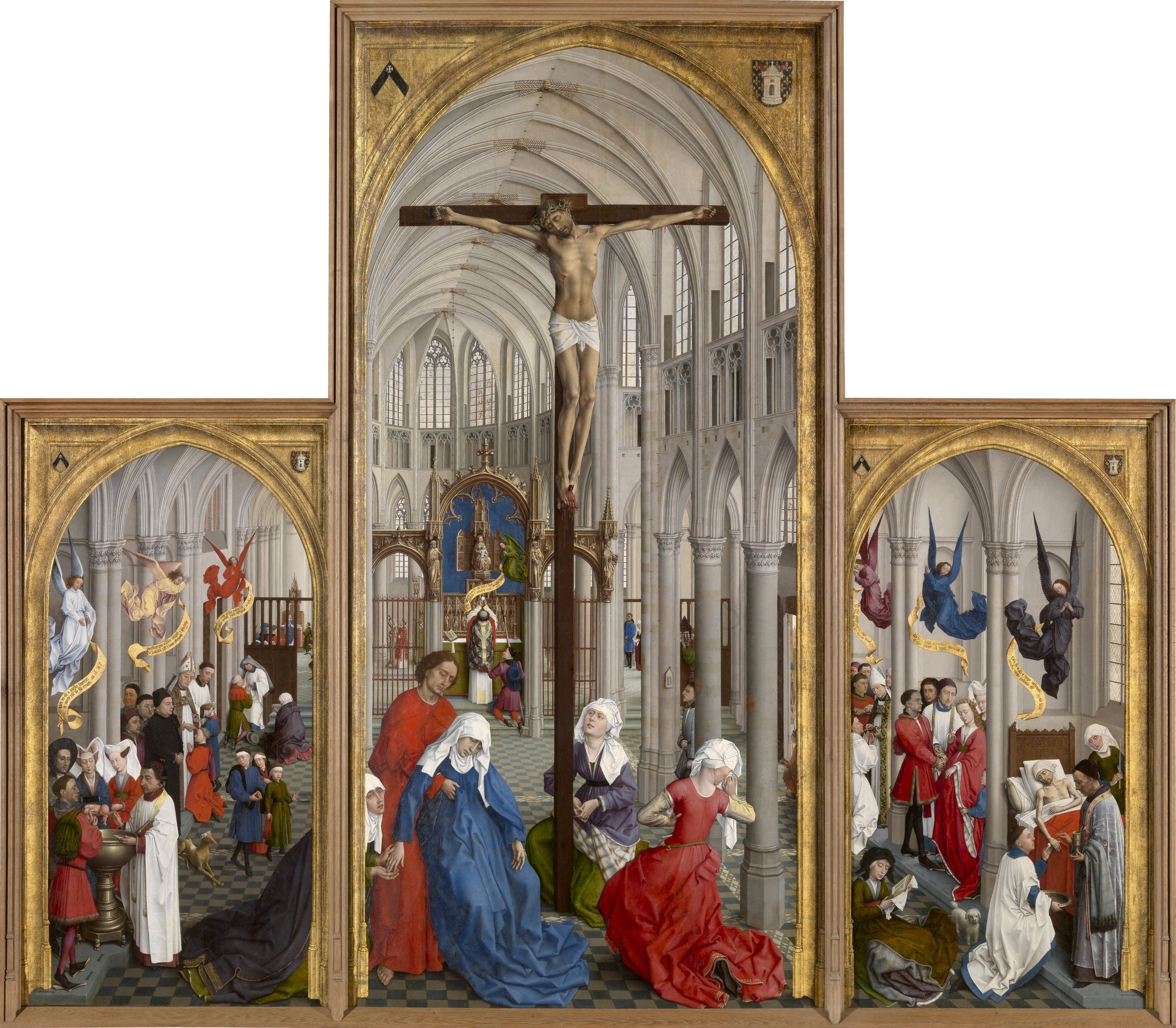
Preceding Substack Post: “The Human IF 3 – Interpretations & Fuzzy Groups – Looking Indeterminate,” https://charleswphillips.substack.com/p/the-human-if-3-interpretations-and (March 29, 2026).
“Now after ten years of war and anarchy all prosperity vanished, never again to be fully revived down to the present day. Usually the patient toil of peasants may be trusted to heal the wounds of the earth. This time, however, sword and torch seem to have done their work too thoroughly for redemption. Only a generation after Manzikert, when the Crusaders marched through Asia Minor, they found a bitter, man-made desert in which brambles were growing out of the ruins of once thriving cities.” – Lynn Montross, War Through the Ages (3rd Ed., 1960), p. 131.
This description of the phenomenon by Lynn Montross, which has captivated me since I was in high school, may describe both emergence and a punctuated equilibrium (the two are not inconsistent) in human history and civilizations.
Dune was published about five years after Montross published this work. This is not to suggest that Herbert was aware of Montross or would have even looked at his book, but rather that both are expressing an idea that was circulating in the early 1960s. I read Dune at the same time I read Montross, in high school.
“Hulagu began his campaign in Persia with several offensives against Nizari groups, including the Assassins, who lost their stronghold of Alamut. He then marched on Baghdad, demanding that Al-Musta’sim accede to the terms imposed by Möngke on the Abbasids. Although the Abbasids had failed to prepare for the invasion, the Caliph believed that Baghdad could not fall to invading forces and refused to surrender. Hulagu subsequently besieged the city, which surrendered after 12 days. During the next week, the Mongols sacked Baghdad, committing numerous atrocities and destroying the Abbasids’ vast libraries, including the House of Wisdom. The Mongols executed Al-Musta’sim and massacred many residents of the city, which was left greatly depopulated. The siege is considered to mark the end of the Islamic Golden Age, during which the caliphs had extended their rule from the Iberian Peninsula to Sindh, and which was also marked by many cultural achievements.” – Wikipedia, “Siege of Baghdad (1258).”
“The Mongols looted and then destroyed mosques, palaces, libraries, and hospitals. Priceless books from Baghdad’s thirty-six public libraries were torn apart, the looters using their leather covers as sandals. Grand buildings that had been the work of generations were burned to the ground. The House of Wisdom (the Grand Library of Baghdad), containing countless precious historical documents and books on subjects ranging from medicine to astronomy, was destroyed. Survivors said that the waters of the Tigris ran black with ink from the enormous quantities of books flung into the river and red from the blood of the scientists and philosophers killed.” Id.
“Some historians believe that the Mongol invasion destroyed much of the irrigation infrastructure that had sustained Mesopotamia for many millennia. Canals were cut as a military tactic and never repaired. So many people died or fled that neither the labour nor the organization were sufficient to maintain the canal system. It broke down or silted up. This theory was advanced by historian Svatopluk Souček in his 2000 book, A History of Inner Asia.” Id.
“The Library of Alexandria was not destroyed in a single event, but rather through slow decline and multiple destructions over roughly 600 to 700 years. Key damage occurred from the 1st century BC through the late 4th century AD starting with Julius Caesar’s fire in 48 BC and culminating in the destruction of the Serapeum in 391 AD. ... While some myths suggest a destruction as late as 641 AD, most scholars agree the main library and its collections were gone by the end of the 4th century.” – Google AI.
Hypatia of Alexandria, the last famous person associated with the Library of Alexandria, which by that time was likely only a small annex with a few shelves of scrolls, was murdered in 415 AD (age 45 to 65 years old) by a Christian lynch-mob who then burned anything that was left of the Library. “Her father, Theon of Alexandria is officially documented as the last director of the Alexandrian Museum (the institution that housed the library) before its closure in 391 AD. Hypatia is considered the last significant mathematician and scholar associated with that tradition. ... Most historians agree the Great Library itself had already ceased as a major institution by the time Hypatia was active. She likely taught at the University of Alexandria (the Mouseion) or the Serapeum (the daughter library) before its destruction.” (Google AI).
Sometime in the last two months of 1996, I had a dream that I still remember. When I was a teenager, I had many vivid dreams and could remember many of them when I woke up. Some of those, I still remember vaguely, but by 1996, it was more unusual for me to remember anything when I awoke. In the dream, I was standing in some place; my mind interpreted it as a warehouse. It was dark there, except for one overhead light where I was standing. There was a small table, just a basic worktable, grey metal at the edge of the light. I was speaking to people I could not see, about something I don’t remember clearly. What I did remember when I awoke was that we discussed the Library of Alexandria. I recalled being told that the Library of Alexandria was not lost; that it still existed and that we would find it when the time came.
While it is true that I had seen Carl Sagan’s Cosmos episode featuring his distorted story of the destruction of the Library of Alexandria and the death of Hypatia of Alexandria many times, thinking about it immediately afterward, I determined that I had no reason to think about the Library at that time and certainly no reason to dream about it; I had not thought about it in a very long time before that dream, nor had I watched Cosmos in many years.
This account is stated matter-of-factly; I have no desire to follow the esotericism and/or channeled or received ancient knowledge ways of Crowley, Blavatsky, John Smith, or the authors of The Uranita Book, or a thousand others of their ilk. It’s not my business, it’s not useful here. If you claim to be receiving knowledge and inspiration from extraterrestrial or extradimensional sources (both terms are used in the broadest sense), you will be heard from the kid’s table with amusement – even if it is perfectly clear that you are correct in whatever you are saying. Humanity only currently accepts knowledge, suggestion and inspiration from humanity. Thus the Bible and other ancient holy books have fallen far in the public view as their ancient authors claimed to have inspiration and power from transcendent beings in the universe.
But I did, for whatever reason, have the dream and remembered it and wrote it down two decades later. Initially, I interpreted the dream rather literally even if not taking it seriously, that the materials were located somewhere to be found or discovered (like the Dead Sea Scrolls). If I were to think of it now, I’d be more inclined to some sort of universe information memory grid and/or collective consciousness explanation – for which I have absolutely no empirical evidence, but have noticed headlines in recent years that some physicists believe reality is not “real” and the universe is an information grid, in describing reality, we are really describing an information grid. If so, we may discover that the information of the Library still exists in some form, but I have no idea how, or what that would mean and it’s a long, long way off.
Nudity in paintings is a feature of humanism, which was the driving force of the Renaissance. Even before technology, the definitions were being stretched somewhat by nude models who posed for paintings (e.g., Sandro Botticelli’s early Renaissance paintings “The Birth of Venus” and “Primavera” or Raphael’s painting of his mistress titled, “La Fornarina”), and of course, by exotic dancers and other similar prurient performers (e.g., the Banquet of Chestnuts, 1501 in the apartment of Cesare Borgia with his father, Pope Alexander VI present and an active spectator). And there were religious protestations, later, during the Counter-Reformations and religious wars, many of the nude paintings of humanist artists were banned, stored away, effaced, or covered over but the trend resurfaced in the later Baroque period (e.g., François Boucher, noting that noble or respectable women sat nude for his paintings, for example, the nude, very suggestive “Portrait of Marie-Louise O’Murphy” who was King Louis XV’s mistress). Do you think the artist didn’t take some gratification from painting his subjects nude?
I too, for example, have a slightly difficult time accepting that the Enlightenment ‘ended’ at the Battle of Waterloo in 1815; though I do generally understand the concept of the relationship of the Enlightenment to the French Revolution, why not say the Enlightenment ended in 1804 when Napoleon (a product of the Enlightenment to be sure) crowned himself Emperor of France (literally, took the crown right out of the Pope’s hands), and became the last ‘enlightened despot’ and ended the French Revolution? Or Raymond Birn’s periodization end date of 1789, when the French Revolution began?
It is very difficult to step outside your time’s worldview; medieval people are alien to us, we are more like the Romans (and also not very much like the Romans) than people of what were later called the Middle Ages. Most characters in modern-written medieval fantasy, docudrama, or historical fiction and costume epics (and fantasy role playing games), are modern or nearly modern people in medieval costume, and most of them are lords and ladies (i.e. ‘important people’), and not peasants (like in the SCA). This was a point that stood out most noticeably in the failed – it lasted one month – 1992 television series, Covington Cross, the characters were modern people in medieval costumes: The pilot opening scene was ridiculous and the rest didn’t get better.
Conversely, sometimes a true effort is rewarded: “After researching about old pagan beliefs and folklore about witches, that were supposed to roam the mountain woods in those times, my interest was to develop a character that these folk tales would have branded as a witch, but to dig deeper into her psyche and see her as the traumatized, mistreated and finally delusional person that society constructed. As well as to understand what utterly evil things people were lead to do while suffering from psychosis in the middle ages and being surrounded by superstition and religious prosecution. The film tries to depict a very personal and empathetic mental image of a nightmarish and sick mind.” – Lukas Feigelfeld discussing his movie, Hagazussa – A Heathen’s Curse (2018), from Brad Miska, “‘Hagazussa’ Poster Evokes a Heathen’s Curse,” September 13, 2017.
Bing Co-Pilot summarizes as follows: “Historical periodization – the division of history into distinct eras or periods – is often linked to the idea of Zeitgeist (‘spirit of the age’), which refers to the prevailing intellectual, cultural, ethical, and political climate of a given historical epoch. In this sense, each period is not just a sequence of events but a cultural and ideological context that shapes the values, beliefs, and practices of its time. How Zeitgeist Relates to Periodization: In traditional historiography, periods are often defined by a dominant Zeitgeist – a set of shared ideas, images, and values that underpin the activities and creations of a generation • The Enlightenment (late 17th – 18th century) was marked by a Zeitgeist of reason, skepticism of tradition, and ideals of liberty and progress. • The Industrial Revolution (late 18th- early 19th century) had a Zeitgeist shaped by mechanization, efficiency, and the rise of industrial capitalism. • The Information Age (late 20th-21st century) is defined by a Zeitgeist of digital connectivity, data-driven economies, and rapid technological change. These examples show that periodization can be both a chronological framework and a cultural analysis tool – identifying when a particular Zeitgeist emerges, persists, or shifts. Modern Sociological Perspective: Contemporary cultural sociology treats Zeitgeist as a sociological hypothesis for period specific cultural patterns. How Zeitgeists extend in time and across social spaces. • The media and socio-material carriers that sustain them. • Their formal properties – such as shared symbols, narratives, and practices – that link different realms of social life. This approach allows historians and sociologists to compare Zeitgeists across periods and contexts, moving beyond idealist notions of period coherence. Why the Link Matters: The connection between historical periodization and Zeitgeist is important because: • It helps explain why certain ideas and practices dominate in a given era. • It provides a framework for understanding cultural change over time. • It enables cross-period comparisons to identify continuities and shifts in societal values. In short, historical periodization is not just about dates – it is also about capturing the spirit of the times that defines each era’s cultural and social life.”
“The term Middle Ages also derives from Petrarch. He was comparing his own period to the Ancient or Classical world, seeing his time as a time of rebirth after a dark, intermediate period, the Middle Ages. The idea that the Middle Ages was a middle phase between two other large scale periodizing concepts, Ancient and Modern, still persists. It can be subdivided between Early, High and Late Middle Ages. The term Dark Ages is no longer in common use among modern scholars because of the difficulty of using it neutrally, though some writers have tried to retain it and divest it of its negative connotations. The term ‘Middle Ages’ and especially the adjective medieval can also have a negative ring in colloquial use, but does not carry over into academic terminology.” – Wikipedia, “Periodization.”
“There is some debate over when exactly the Renaissance began. However, it is generally believed to have begun in Italy during the 14th century, after the end of the Middle Ages, and it reached its height there between the 1490s and the 1520s, a period referred to as the High Renaissance. Renaissance ideas and ways of thinking also began spreading to the rest of Europe in the 14th and 15th centuries. The Renaissance as a unified historical period ended in Italy with the fall of Rome in 1527, and it was eclipsed by the Reformation and Counter-Reformation elsewhere in Europe by the end of the 16th century.” – Encyclopedia Britannica at “Renaissance.”
“Instead of wanting everyone to share and know of their discoveries, the Pythagoreans suppressed the square root of two and the dodecahedron. The outside world was not to know. The Pythagoreans had discovered in the mathematical underpinnings of nature one of the two most powerful scientific tools.
The other, of course, is experiment. But instead of using their insight to advance the collective voyage of human discovery, they made of it little more than the hocus-pocus of a mystery cult. Science and mathematics were to be removed from the hands of merchants and artisans. This tendency found its most effective advocate in a follower of Pythagoras named Plato. He preferred the perfection of these mathematical abstractions to the imperfections of everyday life. He believed that ideas were far more real than the natural world. He advised the astronomers not to waste their time observing stars and planets. It was better, he believed, just to think about them.
Plato expressed hostility to observation and experiment. He taught contempt for the real world and disdain for the practical application of scientific knowledge. Plato’s followers succeeded in extinguishing the light of science and experiment that had been kindled by Democritus and the other Ionians. Plato’s unease with the world as revealed by our senses was to dominate and stifle Western philosophy.” – Carl Sagan, Cosmos Ep. 7 (1980).
***
“But why had science lost its way in the first place? What appeal did Pythagoras’ and Plato’s teachings have for their contemporaries? They provided, I believe, an intellectually respectable justification for a corrupt social order. The mercantile tradition which had led to Ionian science also led to a slave economy. You could get richer if you owned a lot of slaves. Athens, in the time of Plato and Aristotle had a vast slave population. All of that brave Athenian talk about democracy applied only to a privileged few.
Plato and Aristotle were comfortable in a slave society. They offered justifications for oppression. They served tyrants. They taught the alienation of the body from the mind, a natural enough idea, I suppose, in a slave society. They separated thought from matter. They divorced the Earth from the heavens. Divisions which were to dominate Western thinking for more than 20 centuries.
The Pythagoreans had won. In the recognition by Pythagoras and Plato that the cosmos is knowable, that there is a mathematical underpinning to nature, they greatly advanced the cause of science. But in the suppression of disquieting facts, the sense that science should be kept for a small elite, the distaste for experiment, the embrace of mysticism, the easy acceptance of slave societies, their influence has significantly set back the human endeavor.
The books of the Ionian scientists are entirely lost. Their views were suppressed, ridiculed and forgotten by the Platonists and by the Christians, who adopted much of the philosophy of Plato. Finally, after a long, mystical sleep in which the tools of scientific inquiry lay moldering, the Ionian approach was rediscovered. The Western world reawakened. Experiment and open inquiry slowly became respectable once again. Forgotten books and fragments were read once more. Leonardo and Copernicus and Columbus were inspired by the Ionian tradition.
The Pythagoreans and their successors held the peculiar notion that the Earth was tainted, somehow nasty, while the heavens were pristine and divine. So the fundamental idea that the Earth is a planet, that we’re citizens of the universe, was rejected and forgotten.” Id.
Or as Dean Ralph Inge said: “We may surmise that the European man, the fiercest of all beasts of prey, is not likely to abandon the weapons which have made him the lord and the bully of the planet. He has no other superiority to the races which he arrogantly despises. Under a régime of peace the Asiatic would probably be his master.” – Dean William Ralph Inge, Outspoken Essays, “The Future of the English Race” (The Galton Lecture, 1919).
Some Sources:
Mark Wheelis, “Biological Warfare at the 1346 Siege of Caffa,” Emerging Infectious Diseases Journal (of the CDC), Vol. 8, No. 9, September 2002.
Brian Handwerk, “Plague was infecting humans 3,300 years earlier than thought,” Smithsonian.com, October 22, 2015.
A possible or probable earlier version, the Plague of Justinian, had ravaged Constantinople, Greece, Italy and port cities around the Mediterranean starting in 542 A.D., killing 25 to 50 million people over two centuries. That is about 10-12% of the current U.S. population, but with lower population density, it was much more devastating to them. However, the fatality rate of the Black Death was very high over a much shorter period of time; modern estimates range from 45% to 60% of population in an urban locality may die of the disease over a four-year time with many fleeing to other places where they spread the infection or were infected by the disease that others brought.
The Black Death (Second Pandemic) also spread through the Middle East, Egypt and North Africa with equally devastating consequences, the Black Death inflicted a huge toll on the Mongol Empire hastening its rapid decline.
The Church could not explain or stop the plague, the authorities had no answers, none under-stood the causes. The pandemic eroded faith in the Church and the secular authorities whose legitimacy was granted by the Church. Since the Church also provided primary medical care and burial, a disproportionate amount of the lower clergy died of the Plague, such that the shortages were made up by admission of less qualified and less desirable people (and people with a different worldview due to the times) to the clergy and staff.
“Realizing what a deadly disaster had come to them, the people quickly drove the Italians from their city. However, the disease remained, and soon death was everywhere. Fathers abandoned their sick sons. Lawyers refused to come and make out wills for the dying. Friars and nuns were left to care for the sick, and monasteries and convents were soon deserted, as they were stricken, too. Bodies were left in empty houses, and there was no one to give them a Christian burial.” –author unknown.
Pope Boniface VIII secularized medicine about 1300 A.D. by removing the requirements that medical doctors complete basic clergy training. The long-term importance of this small move – the secular medical science of the West – in the development of Western civilization cannot be understated.
Other factors, such as militarization of the peasantry (starting with the Crusades), growing use of gunpowder (‘the great equalizer’), dynastic ambitions, Church corruption from top to bottom, religious schisms, rise of wealthy merchant classes and a new middle-class, wealth influx from the New World and population drain from colonization, and the literal and figurative moral and economic bankruptcy of the feudal system, enabled and accelerated the collapse of European feudal society.
“There is nothing new in the world, except the history you do not know.” – Pres. Harry S. Truman. Americans often don’t realize the proximity of important events to American history (if they even know about them), for example, the Battle of Vienna which turned back the last Ottoman invasion of Europe, happened in 1683, less than a century before the American Revolution. The Second French Invasion of Mexico happened from 1861 to 1867, when the United States was too preoccupied by the American Civil War to do anything about it, and the only popular reference I know to the event is the 1970 movie Two Mules for Sister Sarah. Meanwhile, the massive and barely-noticed Chinese Taiping Rebellion from 1850 to 1864, overlapping with the Second Opium War in China, from 1856-1860, which would have ramifications affecting the United States (e.g., Pearl Harbor, WWII, Communist China) well into the mid-20th Century. Even the Russo-Japanese War of 1905 had ripples proximately leading to both WWI and WWII, both of which involved the United States. Likely, 50% of the publicly-educated population does not know that the United States was involved in WWI (unless they served in the Marines!).
Merriam-Webster online dictionary at Little Ice Age: “an episode of glacial expansion whose maximum extension occurred in the 17th and 18th centuries.”
“The Little Ice Age, by anthropology professor Brian Fagan of the University of California at Santa Barbara, tells of the plight of European peasants during the 1300 to 1850 chill: famines, hypothermia, bread riots and the rise of despotic leaders brutalizing an increasingly dispirited peasantry. In the late 17th century, agriculture had dropped off dramatically: ‘Alpine villagers lived on bread made from ground nutshells mixed with barley and oat flour.’ Historian Wolfgang Behringer has linked intensive witch-hunting episodes in Europe to agricultural failures during the Little Ice Age.” – Wikipedia, “Little Ice Age.”
“History of the World” courses in American public schools are really ‘American justification’ courses, ‘world history’ lessons usually end with the New World, which then becomes an ‘America in world history’ course disguised as a ‘world history course’ because in the teleological view of the American public, world history exists solely to create the United States and world history since 1775 is solely the history of the United States; just as most people vaguely assume or believe the “purpose” of natural evolution was to inevitably produce humanity, as a replacement for the creation story. And during the Cold War fears of global thermonuclear apocalypse, the United States might be the end of world history.
Social, cultural, population and biological effects markedly similar to the Black Death would occur after a global thermonuclear holocaust. While most of the nuclear holocaust movies I watched as a teenager (Damnation Alley (1977), WWIII (TV mini-series 1982), The Day After (1983), By Dawn’s Early Light (1990)) were made primarily for shock and horror instead of post-apocalyptic profundity, the movies On the Beach (1959, miniseries 2000), Threads (1984), Testament (1983), When the Wind Blows (animated, 1986), the Mad Max series, Deathlands (2003), the TV series Jericho (2006-2008) and Book of Eli (2010) stand out as stories about normal people caught up in the immediate aftereffects of a nuclear attack and the longer term effects, some treating it more seriously than others.
“Accounts from Europe indicate that the danse macabre took another form, inspired by the Black Death, rather like our children’s rhyme ‘Ring o’ Ring o’ Roses,’ which refers to the Great Plague. In 1374, a fanatical sect of dancers appeared in the Rhine, convinced that they could put an end to the epidemic by dancing for days and allowing other people to trample on their bodies. It is not recorded whether they recovered but, incredibly, they began to raise money from bystanders. By the time they reached Cologne they were 500 strong, dancing like demons, half-naked with flowers in their hair. Regarded as a menace by the authorities, these dancers macabre were threatened with excommunication.” – Catharine Arnold, Necropolis: London and Its Dead (2006). [Note: This is a mass hysteria example of “tarantism” associated with that time period]
“How many valiant men, how many fair ladies, breakfast with their kinfolk and the same night supped with their ancestors in the next world! The condition of the people was pitiable to behold. They sickened by the thousands daily, and died unattended and without help. Many died in the open street, others dying in their houses, made it known by the stench of their rotting bodies. Consecrated churchyards did not suffice for the burial of the vast multitude of bodies, which were heaped by the hundreds in vast trenches, like goods in a ships hold and covered with a little earth.” – Giovanni Boccaccio (1313-1375) from The Decameron, Italian Renaissance humanist, contemporary of Dante and Petrarch, The Decameron was placed on the Church’s Index of Forbidden Books and a “corrected” (Bowdlerized) edition was issued in 1559.
“This day, much against my will, I did in Drury Lane see two or three houses marked with a red cross upon the doors, and ‘Lord have mercy upon us’ writ there; which was a sad sight to me, being the first of the kind that, to my remembrance, I ever saw. It put me into an ill conception of myself and my smell, so that I was forced to buy some roll-tobacco to smell to and chaw, which took away the apprehension.” – Samuel Pepys Diary, June 7, 1665
“Aristocracy is that form of government in which education and discipline are qualifications for suffrage and office holding.” – Aristotle.
There appears to be a link between the failure of aristos in the aristocracy and the print revolution: Deprived of their major advantage in education, critical thinking, over the masses by the wide availability of learning and the rising middle class, the only things left to the position of the aristocracy were their eroding wealth advantage and hereditary dynastic authority. That is, during the Middle Ages (as we call them) and, to a lesser extent, up to the Reformation period, the aristocracy was aristos by virtue of their position and educational advantages, but following 1500 A.D. the aristocracy eroded very quickly into a hereditary, leisured – useless – upper class.
George III of England was mocked by the late 18th century press because he was interested in mundane things like agriculture, astronomy, because he wanted to learn and to know on his own.
“[Gutenberg’s] introduction of mechanical movable type printing to Europe started the Printing Revolution and is regarded as a milestone of the second millennium, ushering in the modern period of human history. It played a key role in the development of the Renaissance, Reformation, the Age of Enlightenment, and the scientific revolution and laid the material basis for the modern knowledge-based economy and the spread of learning to the masses....
In Renaissance Europe, the arrival of mechanical movable type printing introduced the era of mass communication which permanently altered the structure of society. The relatively unrestricted circulation of information – including revolutionary ideas – transcended borders, captured the masses in the Reformation and threatened the power of political and religious authorities; the sharp increase in literacy broke the monopoly of the literate elite on education and learning and bolstered the emerging middle class. Across Europe, the increasing cultural self-awareness of its people led to the rise of proto-nationalism, accelerated by the flowering of the European vernacular languages to the detriment of Latin’s status as lingua franca.
...while Western-style printing was adopted all over the world, becoming practically the sole medium for modern bulk printing. The use of movable type was a marked improvement on the handwritten manuscript, which was the existing method of book production in Europe, and upon woodblock printing, and revolutionized European book-making.” – Wikipedia, “Johannes Gutenberg.”
For example, Kepler’s Conversation with Galileo’s Sidereal Messenger, was published in 1610 in response to Galileo’s Sidereus Nuncius, also published in 1610. This is the book that got Galileo embroiled in the famous controversy with the Church – because he said that celestial bodies, specifically the moon, had mountains, irregularities, like the Earth, and was not a perfect spherical heavenly body. Independent observations by others soon confirmed his claims; this begins the necessity of independent verification to scientific claims. Francis Bacon published his famous book, Novum Organum Scientiarum, around 1620 A.D.
And here would be an interesting point for discussion. It is implied that the loss of the author’s name is inherently bad. But it is not clear why this is? What is important about the author’s name if we still have the written work? The importance of authorship in printed works, both for reference and for the commercial value of the name, arising from the printing revolution parallels generally the egocentric, individualism drift of Western Society and later, civilization globally, in the last 500 years, the first technological empowerment of individualism. Before the printing press, could modest Erasmus have envisioned his name on 750,000 works?
Johann Tetzel was a sort of licensed insurance agent. He had a product to sell and if you could afford it and thought it was for you, he was the guy. Results are not guaranteed! He was just trying to make a living and move up the company ladder. On the flip side of this, because he was an agent of the Archbishop of Mainz (and a Dominican friar), his word on doctrine was taken as both learned and official, just like a modern insurance agent and his agency can be held legally responsible for misrepresenting what is being sold.
“Fresh scope was given to his activity in 1517 by archbishop Albrecht of Mainz. Albrecht had been elected at the age of twenty-four to a see already impoverished by frequent successions and payments of annates to Rome. He had agreed with Pope Leo X to pay his first-fruits in cash, on condition that he were allowed to recoup himself by the sale of indulgences. Half the proceeds in his province were to go to him, half to Leo X for building the basilica of St Peter’s at Rome.
Tetzel was selected as the most efficient salesman; he was appointed general sub-commissioner for indulgences, and was accompanied by a clerk of the Fuggers from whom Albrecht had borrowed the money to pay his first-fruits. Tetzel’s efforts irretrievably damaged the complicated and abstruse Catholic doctrine on the subject of indulgences; as soon as the coin clinks in the chest, he cried, the soul is freed from purgatory. In June he was at Magdeburg, Halle and Naumburg; the elector of Saxony excluded him from his dominions, but Albrecht’s brother, the elector Joachim of Brandenburg, encouraged him at Berlin in the hope of sharing the spoils, and by the connivance of Duke George of Saxony he was permitted to pursue his operations within a few miles of the electoral territory at Wittenberg.
Luther was thus roused to publish his momentous ninety-five theses on the subject of indulgences on October 31, 1517. Even Albrecht was shamed by Luther’s attack, but he could not afford to relinquish his profits already pledged for the repayment of his debts; and Tetzel was encouraged to defend himself and indulgences. Through the influence of Conrad Wimpina, rector of Frankfurt, Tetzel was created D.D. of that university, and with Wimpina’s assistance he drew up, in January 1518, a hundred and six theses in answer to Luther’s.
But the storm overwhelmed him: sober Catholics felt that his vulgar extravagances had prejudiced Catholic doctrine, and Miltitz, who was sent from Rome to deal with the situation, administered to him a severe castigation. He hid himself in the Dominican convent at Leipzig in fear of popular violence, and died there on the 4th of July 1519, just as Luther was beginning his famous disputation with Eck.” – Albert Frederick Pollard, 1911 Encyclopædia Britannica (now in the public domain).
There’s an image to behold: A Dominican friar accompanied by a clerk from Fuggers as he travelled through Germany selling indulgences under questionable doctrine while conniving local hereditary rulers sought to get a piece of the action. There is not much an apologist can do with that, except to cite to the milieu.
I am not here to suggest that Johann Tetzel in any way ‘caused’ the Reformation or the Protestant revolt. Rather, I think he thought he was being quite clever, exploiting cracks in Church doctrine and human social and psychological needs to make a few coins and maybe move up the ladder. Like Pharma-bro and Michael Milken, he failed to anticipate the public blowback, how his technical exploitation would be seen, that he would be the catalyst for dis-sent.
According to H. Ganss, in The Catholic Encyclopedia (1912):
“...Tetzel, deserted by the public, broken in spirit, wrecked in health, retired to his monastery at Leipzig in 1518. Here in the middle of January, 1519, he had to face the bitter reproaches and unjust incriminations of Carl von Meltitz. It was at this time that Luther magnanimously penned a letter [to Tetzel] in which he tries to console him by declaring ‘that the agitation was not that of his [Tetzel’s] creation, but that the child had an entirely different father.’ Tetzel died soon after, received an honourable burial, and was interred before the high altar of the Dominican church at Leipzig.”
“How much more should I, who am but dust and ashes, and so prone to error, desire that everyone should bring forward what he can against my doctrine. Therefore, most serene emperor, and you illustrious princes, and all, whether high or low, who hear me, I implore you by the mercies of God to prove to me by the writings of the prophets and apostles that I am in error. As soon as I shall be convinced, I will instantly retract all my errors, and will myself be the first to seize my writings, and commit them to the flames.” – Martin Luther, “Speech before the Diet of Worms” (1521), Paragraph 7 (delivered in both Latin and German).
I have often wondered when authorities knew that Luther was involved in the escape of the nuns. As he sponsored the integration of the (former) nuns into the community, it is quite likely that in short order local officials knew of his involvement; who else could have orchestrated the breakout? And what effect that had on later reception of his works, for example, at the Diet of Augsburg in 1530 (the Augsburg Confession); he had “fled” the Diet of Worms in 1521, being kidnapped by his supporters and whisked away for his own protection, and was declared an outlaw and enemy of the state by Charles V. Thus he was already two years an outlaw and excommunicated priest when he staged the escape of the nuns from the convent in 1523.
But he was a hugely popular local figure and the Elector of Saxony was his protector; Christina of Saxony, daughter of the Duke of Saxony, was married to Philip of Hesse (Landgrave of Hesse) who was an ardent and ambitious supporter of Luther, and who organized the Schmalkaldic League defensive military alliance against the Holy Roman Emperor Charles V (Hesse however turned out to be a horrible military commander), and Hesse later turned to Luther when caught in a bigamous morganatic marriage scandal with a lady-in-waiting of his sister Elizabeth, while still married to Christina whom he claimed was a miserable alcoholic (yet they had ten children!).
I think I would have liked to have known Martin Luther and Desiderius Erasmus. Though we would have disagreed mightily on many things – mainly the whole God and religion issue – and many things have happened and become known in the last 500 years that lead me to much different opinions than they held in the early 16th Century; I find myself impressed by and attracted to their writings, ideas, speeches, and life and fascinated by the events of the Reformation. They were men of mind, not fools, who were apparently surprised and made uncomfortable by what Luther unleashed.
Charles V, Holy Roman Emperor (and one of the most powerful men on the planet in his day) was at war with the French in northern Italy. His mercenary armies were victorious, but unpaid and poorly supplied, in the spring of 1527. His armies marched on Rome, which they captured and sacked (loot, rape, burning and murder – in case the term needed any clarification) on May 6, 1527, also capturing and sacking several other towns along the way. The Habsburg commander, Charles III, Duke of Bourbon, was killed in the attack and the subordinate commanders lost control of the troops as they rampaged through Rome.
Charles III, Duke of Bourbon, had what we would call ‘street cred’ with the mercenary forces he commanded – he was wanted for treason by the King of France, Francis I, with whom he had a very personal and familial dispute. In addition to being a capable military commander, with experience and fame, he was also an outlaw, a dispossessed titled noble, and a soldier of fortune, and was able to keep his army disciplined with his personality, gravitas and prestige. When he died attacking the walls of Rome, there was nothing left to restrain his men. His death probably led to unintended consequences, otherwise, you would have to argue that what happened in Rome is what Charles III intended. It seems he intended extortion after capturing Rome, but probably not a massacre, disease, burning, or looting of the Vatican (but that might have happened anyway).
This is the date of the famed stand of the tiny Swiss Guard at the Teutonic Cemetery in front of St. Peter’s Basilica within the Vatican, against overwhelming odds; the Guard was nearly annihilated buying time for the Pope to escape. As a result of which, the Swiss Guard became a symbol of a sort of eternal honor based on loyalty, duty, dedication, courage and sacrifice. This is consistent with generally, the Christian worldview.
The little-known Stand of the Swiss Guard is the subject of Sabaton’s excellent song, “The Last Stand” (available on YouTube). The historical problem is that while the Swiss Guard’s virtue was immortalized, the events and damage to the Church’s legitimacy were not something the Church wanted reminded of, but you can’t have it both ways; to talk about the Stand of the Guard brings forth the facts they wished to sideline.
Eighty percent of the population of Rome either was killed or fled (population dropped from 55,000 to 10,000) in the course of eight months, including most of the artists and intellectuals leading the Renaissance; Rome and the Vatican suffered immense and unrecoverable cultural damage, the city’s economy was destroyed, and disease ran rampant, unburied dead bodies littered the streets. The Pope was forced to pay a huge ransom, melting down gold artifacts and works of art to meet the demand, was forced to cede several cities, including Modena, Parma, and Piacenza, and the patronage system for artists and writers effectively ended. The Habsburg armies finally withdrew in February 1528, leaving a shattered city. Only the Vatican Library survived mostly unharmed, being used as a headquarters for the occupying army.
Upon Charles V’s prominent Habsburg jaw (a result of extensive pedigree collapse) rested the nexus and zenith of European dynastic power and the Holy Roman Empire. He did much to push both toward their eventual sunset centuries later. By 1683, after the Thirty Years War left Germany in shambles and the Holy Roman Empire battered, Vienna was saved from the last Ottoman invasion only by the intervention and brilliant leadership of the Polish king, John III Sobieski. Afterword, the sun set on the prospects of all of the Vienna combatants.
The two-century ‘peak’ of dynastic Europe (the “Dynastic Age”) runs in the time between the reign of Charles V of the Holy Roman Empire (r. 1519-1556) and the death of Louis XIV of France (d. 1715) and includes the Wars of Austrian Succession and Spanish Succession.
“Times have changed. Animal cognition is now a legitimate subject for consideration. Animals apparently do think. Since cats are carnivores, rather high-on-the-scale mammals, they would have to qualify if anything does below the apes and whales. We can now say with a fair degree of certainty (absolute certainty in my mind) that cats think. That surely, is worth consideration since they probably think about what they are seeing and hearing, and very often that is us.” – Roger Caras, A Cat is Watching (1989), p. 147.
“They [dogs and cats] seem closed off from their own mortality and the peril of it all. That level of comprehension would appear to be ours alone.” – Id, p. 208.
Heaven (i.e., eternal afterlife) is rather relative, and that should be the first and only clue needed to understand that it is a completely subjective human cultural construct; humans across cultures don’t even envision the same heaven or afterlife (but is still a ‘fact’ within the fourth order of natural phenomenon and thus cannot be simply dismissed).
What would be heaven to a cat? A painless place with other cats (but not too many) and birds singing, no dogs allowed, where the mice and birds run free, plentiful and are easy to catch, there is running water and streams of milk nearby, endless canned cat food, no upset tummies, every day is sunny, it’s never too cold, and there are lots of great places to lay, dens to have kittens, and maybe some toys, cat tunnels, cardboard boxes, crinkly paper and plastic, strings, stuffed furniture, carpet, and catnip and flying bugs to chase for amusement. Maybe even a kind human caregiver (a sort of ‘benevolent god’ I guess), if the cat ever knew one.
“In ‘The Awakening of Asia’ (1954) ... [Eric] Hoffer discusses the reasons for unrest on the continent. In particular, he argues that the root cause of social discontent in Asia was not government corruption, ‘communist agitation,’ or the legacy of European colonial ‘oppression and exploitation,’ but rather that a ‘craving for pride’ was the central problem in Asia, suggesting a problem that could not be relieved through typical American intervention. For centuries, Hoffer notes, Asia had ‘submitted to one conqueror after another.’ Throughout these centuries, Asia had ‘been misruled, looted, and bled by both foreign and native oppressors without’ so much as ‘a peep’ from the general population. Though not without negative effect, corrupt governments and the legacy of European imperialism represented nothing new under the sun. Indeed, the European colonial authorities had been ‘fairly beneficent’ in Asia. ... According to Hoffer, however, Communism in Asia was dwarfed by the desire for pride. To satisfy such desire, Asians would willingly and irrationally sacrifice their economic well-being and their lives as well.
Unintentionally, the West had created this appetite, causing ‘revolutionary unrest’ in Asia. The West had done so by eroding the traditional communal bonds that once had woven the individual to the patriarchal family, clan, tribe, ‘cohesive rural or urban unit,’ and ‘religious or political body.’ Without the security and spiritual meaning produced by such bonds, Asians had been liberated from tradition only to find themselves now atomized, isolated, exposed, and abandoned, ‘left orphaned and empty in a cold world.’ Certainly, Europe had undergone a similar destruction of tradition, but it had occurred centuries earlier at the end of the medieval period and produced better results thanks to different circumstances. Hoffer notes that ‘the resentment of the weak does not spring from any injustice done them but from the sense of their inadequacy and impotence.’ In short, the weak ‘hate not wickedness’ but themselves for being weak. Consequently, self-loathing produces explosive effects that cannot be mitigated through social engineering schemes, such as programs of wealth redistribution. In fact, American ‘generosity’ is counterproductive, perceived in Asia simply as an example of Western ‘oppression.’” – Wikipedia, “Eric Hoffer.” (emphasis added)
According to both Google and Bing, Eric Hoffer’s “craving for pride” is probably derived from (a manifestation of) Adler’s “striving for superiority” theory in psychology (of which I am Exhibit A) as both are based on perceptions of inferiority and both seek external verification. This is similar to the way in which sociosis was adapted for sociology from neurosis.
“The Rosicrucian manifesto that contains the phrase ‘universal reformation’ is the Fama Fraternitatis (1614), an anonymous Rosicrucian manifesto published in Kassel, Germany. The Fama Fraternitatis was originally appended to the 77th Advertisement (section) titled Generate Riforma dell’Unlverso (The Universal Reformation of Mankind), which was itself a German translation of Bocallini’s satirical work Ragguagli di Parnasso (Advertisements from Parnassus). This title and phrase ‘universal reformation’ are directly linked to the Fama’s mission statement, which called for a spiritual and intellectual renewal of humanity through the teachings of the secret Fraternity of the Rose Cross.
The Fama presents itself as a report from the ‘Fraternity of the Rose Cross’ and outlines its purpose: to spread esoteric Christian wisdom, heal the sick without charge, and promote a transformation of religion, philosophy, and science. The ‘universal reformation’ concept is central to its message, promising a global renewal of human understanding and moral life.” – Bing Co-Pilot AI.
“The Rosicrucian manifestos heralded a ‘universal reformation of mankind,’ through a science allegedly kept secret for decades until the intellectual climate might receive it. Controversies have arisen on whether they were a hoax, whether the ‘Order of the Rosy Cross’ existed as described in the manifestos, or whether the whole thing was a metaphor disguising a movement that really existed, but in a different form. In 1616, Johann Valentin Andreae famously designated it as a ‘ludibrium.’ Some esoteric scholars suggest that this statement was later made by Andreae in order to shield himself from the wrath of the religious and political institutions of the day, which were intolerant of free speech and the idea of a ‘universal reformation,’ which the manifestos called for. ... By promising a spiritual transformation at a time of great turmoil, the manifestos influenced many figures to seek esoteric knowledge. Seventeenth-century occult philosophers such as Michael Maier, Robert Fludd, and Thomas Vaughan interested themselves in the Rosicrucian world view. According to historian David Stevenson, it was influential on Freemasonry as it was emerging in Scotland.” – Wikipedia, “Rosicrucianism.”
I watched a video on YouTube of the Royal Marines Marching Band in a parade through Glasgow, Scotland (unknown date). They were playing the Colonel Boogie. There was no difference at all between Glasgow, Scotland and Pittsburgh, Pennsylvania; they might as well have been marching through center city Pittsburgh in 2018. The buildings looked the same, the store fronts looked the same – they even marched past a Subway restaurant (a ubiquitous sight in Pittsburgh). The traffic lights and banners hanging off of streetlight poles. The people dressed and the cars looked the same as Pittsburgh, it was overcast just like Pittsburgh would be on any given day, people were wearing light jackets and hoodies suitable for a little rain and coolness, most with no hats. The band uniforms were not greatly different than USMC dress blues, except for the pith helmets. And the pavement – when the band turned a corner at an intersection, I happened to notice the – um – pavement condition, and it looked just like any intersection in center city Pittsburgh. Such is the homogenization of cityscapes in the Anglosphere.
I remember seeing a news report around the late 1990s that made this similar point, that a mall or commercial-retail area in Kansas looked just like any one you might find in Georgia or Texas. The homogenization of American landscapes and the disappearance of regional niches and variations has been made possible by media, commercialization, prime farmland turned into cookie-cutter malls and residential developments, consumer economy, the internet, and the dominance of large chain stores and restaurants which have made everything look the same-ness. Some find this reassuring, others disturbing; e.g., those who like the natural uneven look of natural wood paneling and furniture vs. those who like the uniformity of manufactured artificial surfaces such as Formica countertops or stainless steel appliances.
“But how far could a fit, trained person walk in eight hours? Many trained walkers finish a 26.2-mile walker-friendly marathon in about seven hours, with no breaks. If a walker is well-trained and is taking breaks and a meal stop, then 20 miles a day is reasonable. If you take no breaks and are going fast, you may be able to cover 30 miles if you have steadily built your mileage over the course of three to six months. Walkers on the month-long Camino de Santiago trek typically walk 12 to 20 miles per day on terrain that includes many hills. ... The Western pioneers usually covered 20 miles a day with the wagon trains, most of them walking rather than riding.” – Wendy Bumgardner, “How Far Can a Healthy Person Walk?” Very Well Fit (www.verywellfit.com), October 21, 2018.
“All horses move naturally with four basic gaits: the four-beat walk, which averages 6.4 kilometres per hour (4.0 mph); the two-beat trot or jog, which averages 13 to 19 kilometres per hour (8.1 to 12 mph) (faster for harness racing horses); and the leaping gaits known as the canter or lope (a three-beat gait that is 19 to 24 kilometres per hour (12 to 15 mph), and the gallop. The gallop averages 40 to 48 kilometres per hour (25 to 30 mph). The world record for a horse galloping over a short, sprint distance is 88 kilometres per hour (55 mph). Besides these basic gaits, some horses perform a two-beat pace, instead of the trot. In addition, there are several four-beat ‘ambling’ gaits that are approximately the speed of a trot or pace, though smoother to ride. These include the lateral slow gait, rack, running walk, and tölt as well as the diagonal fox trot. Ambling gaits are often genetic traits in specific breeds, known collectively as gaited horses. In most cases, gaited horses replace the standard trot with one of the ambling gaits.” – from speedofanimals.com, “Horse Equus ferus caballus” captured February 26, 2019.
“Essentially, it depends on the horse. Horses are athletes, and well-conditioned horses that are used to travelling long distances can travel much further than horses that are not used to such activity. If your horses don’t get out and do this particularly often, then 20-30 miles (30-50 km) per day is probably a good estimate. Wikipedia supports this, with a claim of 30 miles (50 km) per day for a small mounted company. This involves the horse walking for most of the duration of the day, with short breaks. Of course, a fit horse can travel further than this. Mounted soldiers would ride their horses 50-60 miles (80-100 km) in a day. This is more taxing on both the horses and the riders. Over the course of 6 weeks of travel, it’s possible that good riding horses would get into better travel shape, and be able to go further, perhaps in the 40 mile (65 km) per day range. This would involve spending much of the day at a pace faster than a walk, such as a trot, though not at a canter or gallop. Trotting would be interspersed with periods of walking to allow the horses to rest while still moving forwards. ... Note that, at the upper end of this, the riders may have more trouble than the horses. During the middle ages, long rides were usually taken on horses referred to as palfreys, which possessed a smooth, ambling gait rather than a trot. This made them much more comfortable to ride for long distances, since a trot is quite bouncy. This isn’t something that the horses are trained to do or learn to do over the course of a ride. Rather, it is a breed characteristic of certain horses. If your riders are not on such horses, they will probably be travelling more around the 20-30 mile per day range, and as such their total distance will be more around 1200 miles for 6 weeks.” – User ckersch, https://worldbuilding.stackexchange.com/questions/6411/possible-distance-travelled-by-horse-over-6-weeks, December 12, 2014.
For example, one of the proposed solutions to the transatlantic communications problem was to create a line of anchored signal barges, manned by one sailor each, to relay signals by lamp or flags across the Atlantic. I am sure that the person who seriously suggested this was not volunteering for barge duty! The solution was the investor-funded transatlantic telegraph cable in 1858, which reduced England to Canada communication time from 10 days to hours – it worked for 3 weeks then failed, but two new cables were working by September 1866; in the early 20th Century, transatlantic telephone by radio was established (by which Churchill spoke to Roosevelt numerous times in WWII, starting in 1939).
Through undersea cables, the entire British Commonwealth was eventually connected around the globe, this network made the capture of London (more precisely, Porthcurno Cable Station in Cornwall) desirable to the Germans in WWII – this issue is never discussed in WWII histories as a strategic objective. The HyperPulse Generator arrays in BattleTech serve a similar role and may have been inspired by the transatlantic cable and radio telephone.
By general agreement and actions, the post-WWII sovereigns generally treated Nazi party members (and regime associates) as hostis humani generis, except where it suited their purposes otherwise (e.g., German scientists who emigrated after the war, Operation Paperclip, noting however out of fairness, that most German scientists were not Nazi party members by free choice); similarly, modern terrorist are likewise generally hostis humani generis except where it is inconvenient to a particular sovereign’s purposes (e.g., the Entebbe Raid, Uganda, 1976 or bin Laden living two blocks from the Pakistani intelligence directorate school in 2008).
“After the sack, many feared other European Christian kingdoms would suffer the same fate as Constantinople. Two possible responses emerged amongst the humanists and churchmen of that era: Crusade or dialogue. Pope Pius II strongly advocated for another Crusade, while Nicholas of Cusa supported engaging in a dialogue with the Ottomans. The Morean (Peloponnesian) fortress of Mystras, where Constantine’s brothers Thomas and Demetrius ruled, constantly in conflict with each other and knowing that Mehmed would eventually invade them as well, held out until 1460. Long before the fall of Constantinople, Demetrius had fought for the throne with Thomas, Constantine, and their other brothers John and Theodore.
Thomas escaped to Rome when the Ottomans invaded Morea while Demetrius expected to rule a puppet state, but instead was imprisoned and remained there for the rest of his life. In Rome, Thomas and his family received some monetary support from the Pope and other Western rulers as Byzantine emperor in exile, until 1503. In 1461 the independent Byzantine state in Trebizond fell to Mehmed.” – Wikipedia, “Fall of Constantinople.”
Thomas died in 1465 and his son (and royal beggar) Andreas Palaiologos (brother of Sophia (Zoe Palaiologina) whose marriage to Ivan III of Moscow was arranged by the Pope) sold his crown and all rights in 1494 to the King of France. Had Constantinople been ‘liberated’ after 1494, it would have been claimed by Charles VIII of France and several French kings thereafter claimed to be Emperor of Constantinople (for what it was worth) until 1566 (at which time the claim was considered extinct and pointless). Andreas Palaiologos allegedly sold his crown and rights a second time to Queen Isabella I of Castile and King Ferdinand II of Aragon (of Christopher Columbus fame). Despite all, he died in poverty in Rome in 1502 and no members of his family claimed right to Emperor of the East. Just like the last Western Roman Emperor.
Lynn Montross, who was certainly aware of the criticism that his spiritual ancestor Edward Gibbon (The History of the Decline and Fall of the Roman Empire (pub. 1776-1788)) had entirely neglected the important contributions of the Byzantine or East-Roman Empire, used two chapters in War Through the Ages (3rd Ed., 1960) in paying handsome tribute to the accomplishments of Byzantine arms, diplomacy and strategic position. It was partially attributable to the Byzantine Empire that the Battle of Tours was fought in 732 A.D.
This same criticism is true in movie-making; critics have noted that there are very few Hollywood movies that show Byzantines or that are about the Byzantine or East Roman Empire. It is as if the West, especially across the Atlantic, has an inexplicable blind spot to that immense period of history covering just about any history south of the Danube, except ancient Greece, or north, south or east of the Black Sea; there are hundreds of ‘Roman’ (as in Western Roman Empire) movies, many of which are considered classics of cinema (e.g., Ben Hur (1959), Quo Vadis (1951)). Movies about the Byzantines are more the subject of local nationalism, e.g., the Bulgarian movie, Khan Asparuh (1984) (heavily edited, reduced, released internationally as 681 AD: The Glory of Khan in 1984) made to mark the 1300th anniversary of Bulgarian nationalism.
The 1968 West German movie, Kampf um Rom (aka The Last Roman) focusing on the intrigues between 6th Century Romans (who actually live in Rome), Ostrogoths, and a Byzantine General to reclaim Italy received poor critical reviews. Likewise, the very expensive 2016 Russian movie Viking, about Vladimir the Great, Prince of Novgorod (the Novgorod Republic remains dear to Russian nationalism) features some Byzantine diplomatic contacts and an attack on a Byzantine colony in Crimea, and was panned by critics.
“You might have to decide between seeing your children again and the future of the human race.” – Prof. Amelia Brand, Interstellar (2014).
Cooper: You sent people out there looking for a new home?
Prof. Brand: The Lazarus missions.
Cooper: That sounds cheerful.
Prof. Brand: Lazarus came back from the dead.
Cooper: Sure, but he had to die in the first place.
– Interstellar (2014).
CASE: Endurance rotation is 67, 68 RPM.
Cooper: CASE, get ready to match our spin with the retro thrusters.
CASE: It’s not possible.
Cooper: No. It’s necessary. – Interstellar (2014).
This is the point in the movie when Cooper transcended. You never see how they matched the rotation. It was impossible. The computer was not wrong, empirically speaking. Yet they did. It was necessary.